Historical Profession

New Resource: History Seminar List

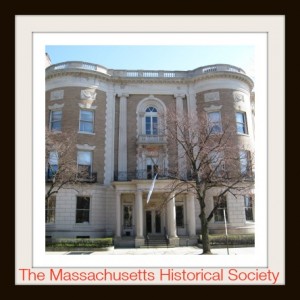
HistoryDo you attend a history seminar? For the last four years, I have been a regular attendee of the Boston Early American History Seminar. It meets at the Massachusetts Historical Society on the first Tuesday of each month between October and May (January excepted).

I enjoy the Boston Early American Seminar because it allows me to meet and converse with other scholars and enthusiasts interested in the history of early America. Each seminar encourages me to consider new ideas and keeps me abreast of the latest scholarship. These opportunities to think and network help me overcome some of the hurdles I face as an independent scholar.

As an independent scholar, I do not have a department of colleagues to turn to when I wish to discuss my research, get stuck, or need a recommendation for a research fellowship. The social time before and after the seminar provides me with chances to extend my network of colleagues, scholars with whom I can talk about my work and ask for a recommendation. Additionally, my regular attendance demonstrates to my academic colleagues that I am someone who takes my scholarship seriously and that I am their peer.


MHSNew Resource: History Seminar List

The Boston Early American History Seminar has played an important role in my intellectual and professional development. I believe that all historians who have access to a seminar should attend one. To this end I have created a new resource for historians: The History Seminar List.

The History Seminar List fills a gap in the internet. I have yet to find a website that lists all of the available history seminars. I have seeded the list with the seminars that I either knew about or found via Google Search. I know that it is incomplete, but I hope that you will help me fill it in by submitting your favorite seminar or any other history seminars that you know about.

Please help me spread the word about the History Seminar List so we can populate it with as many seminars as possible and help our colleagues find a history seminar near them.


History Seminar Resource List Submission Form


History Seminar Resource List


Getting Access: Dutch-American History

Dutch AmericanWelcome to Getting Access, a series devoted to helping you obtain the digital records you need. Do you study the history of colonial America or New York State?

Do you have an interest in learning about Dutch contributions to American history?

If so, did you know that you can gain access to back issues of de Halve Maen for $10/year? Or that the New Netherland Institute provides free, online access to numerous research materials?

In this post you will learn about digital options for primary- and secondary-source records that pertain to Dutch-American history.


de Halve Maen

Since 1922, The Holland Society of New York has printed a quarterly journal called de Halve Maen.

The publication draws readers' attentions to new research concerning the Dutch settlement of North America and Dutch contributions to American history.

Essays range in topics from agriculture to material culture. They also include articles about Dutch genealogy.

Cost of Access: $10/year for Individuals/$45/year for Institutions

DeHalveMaen

What’s Included with Access?

Your membership includes access to all issues printed between 1923 and 2002.

You will have the ability to keyword search back issues.

You will also have access to: • The Holland Society’s membership records • Digital copies of Van Laer’s New York Historical Manuscripts (Volumes 1-4) • Stokes Iconography of Manhattan Island (Volumes 2-4) • "Liber A" of the Collegiate Church Archives, a folio-manuscript book written by Domine Henricus Selijns, minister of the Reformed Dutch Church in New York (1682-1701).

The records contained in "Liber A" provide a documentary history of the Dutch Reformed Church of New York City during Selijns’ ministry. The volume offered by the Holland Society offers the text in both Dutch and English.

DeHalveMaen


New Netherland Institute Online Publications

The New Netherland Institute offers digitized translations and transcriptions of primary-source documents that relate to the history of New Netherland.

The records come from the collections of the New York State Library and New York State Archives. The Institute has also posted documents owned by the New York Public Library and the Scheepvaart Museum in Amsterdam.

Cost of Access: Free

New Netherland Institute

Which Records Are Online?
  • Register of the Provincial Secretary, 1638-1660
  • Minutes of the Council of New Netherland, 1652-1654
  • Correspondence of Petrus Stuyvesant, Director-General of New Netherland, 1647-1658
  • Curaçao Papers, 1640-1665
  • Correspondence of Jeremias van Rensselaer
  • Correspondence of Maria van Rensselaer
  • Court Minutes of Rensselaerswijck
  • Memorandum Book of Antony de Hooges
  • New Netherland Papers of Hans Bontemantel
  • Van Rensselaer Bowier Manuscripts
  • Petrus Stuyvesant’s 1665 Certification of Land Grants to Manumitted Slaves
  • Guide to 17th-century Dutch Coins, Weights, and Measures


Conclusion

The de Halve Maen and New Netherland Institute databases stand as invaluable resources for any historian or genealogist who wishes to research Dutch-American history.

You will find that the records of the New Netherland Institute focus on the history of New Netherland while those of the Holland Society cover New Netherland and its legacy.

Finally, you should know that New York History has finally added its back issues to J-Stor.


time-to-shareWhat Do You Think?

What is your favorite web-based archive or database? What information does it contain?


Ben Franklin + Music = ?

Podcast-MicMy podcast is in development and I need your help. Presently, I am taking a month-long course with Jeff Brown to learn more about podcast intros, outros, and how to conduct interviews so that my listeners will feel like they are part of the conversation.

I am also finalizing the format of my show, which I am still tentatively calling “Ben Franklin’s World: A Podcast About Early American History.”


Segments for "Ben Franklin's World"

I have devised 4 different segments for the show outside of an introduction and concluding remarks.

1. Discovery: A brief segment where I will discuss any fascinating historical discoveries that I have made.

2. Interview/Historical Monologue: This will be the "meat" of the show. I will interview an historian who has conducted (or is conducting) fascinating research about important episodes and people in early American history.

Alternatively, some shows will feature me discussing a captivating story from my own historical research.

3. Time Warp: A post-interview segment where I will ask the interviewee a hypothetical history question for fun.

4. Ask the Historian: A segment where I will answer listener questions about early American history.


Music

One aspect of the show that has me befuddled is the music.

I want to have background music play during my intro and outro segments, which leads me to the question I posed in my title: Ben Franklin + Music = ?

Ben Franklin Equation

Questions

What kind of music do you associate with Ben Franklin or early American history in general?

What type of music would you expect to hear on a podcast about early American history?

What type of music would draw you into the podcast?

I want to find music that fits the subject of early American history and yet also proclaims that this is “not another boring history podcast.”

Please leave a comment, send an e-mail, or tweet me with your ideas about possible genres and artists or if you have general suggestions/comments/questions about "Ben Franklin's World."


Why I Want to Start a Podcast

Podcast-MicOver the last 9 months or so my brain has been stuck on the idea that I want to start a podcast. The podcast provides a perfect medium to convey historical knowledge to a wide audience and for research-driven historians to interact with the larger public.

In this post you will learn why I think starting a podcast is a good idea and about the work I need to do before I launch one.

I hope you will read this post to the end as my idea still needs refining and I could really use your feedback on it.


Why A Podcast?
smartphoneSocial media authorities such as Michael Stelzner have declared 2014 to be the “Year of the Podcast.”

Why?

In 2014, smartphone ownership by adults will increase to over 50%. Additionally, smartphone manufacturers and app providers such as Apple and Google are making it easier for smartphone owners to find, subscribe to, and download podcasts.*

Podcasts allow listeners to create a customized radio station that will always play topics they find interesting on a schedule that conforms to their needs.


There’s An Interest in History

People are interested in history.

As History Camp, C-Span’s American History TV, and the many television shows based in historical periods (Downtown Abbey, Mr. Selfridge, Turn, Outlander, and Sleepy Hollow, to name but a few) demonstrate, people want to interact with and learn more about their history.

History Camp and American History TV, in particular, also show that history lovers want to interact and connect with historians.

The podcast market underserves these history-minded people.
 

PodcastA Problem with Format

Over the last 9 months, I have been thinking about how I can start a podcast that showcases well-researched, historical narratives about early American history.

Initially, I toyed with the idea of presenting 15-20 minute narratives. I have a stack of ideas about mining my American History survey lecture notes, dissertation chapters, and freelance article research for stories and information.

However, I know that 15-20 minutes of speaking equals about 10-12 pages of text.

The most successful podcasts release a minimum of 26 shows a year; a new show every 2 weeks.

This production schedule makes my initial format unsustainable. I want to produce a podcast, but I also want time to work on my other projects, such as my book.

Additionally, my research is narrower than most people’s interests.

Many of my shows would focus on the history of upstate New York or Boston, the areas I have researched over the last 14 years. In the future, they would become Connecticut and Revolutionary War centric as my next project will take me into both of those areas.

My podcast has to be more expansive than my own research to attract a wide audience.


SuccessEureka! My Plan

After wrestling with these thoughts, the solution finally came to me last week: An interview-focused podcast with occasional historical narratives written by me.

As you know, I am passionate about making well-researched history accessible for everyone. It frustrates me that too many of our colleagues do not make enough attempts or time to share their wonderful and important research with non-academics.

My solution of an interview-based podcast will allow me to help historians engage with the public.

My interviews will focus on their research and new books. It will allow interviewed historians to advertise their work and explain to non-academics why their work matters and why it is worthy of their attention.

As the interviewer, I can can ask my guests questions that will encourage them to share their information through the engaging examples and characters they use in their books, articles, and dissertations.

I also hope my podcast will expand our discussions of history.

I plan to interview academic historians, librarians and archivists, museum professionals, historians at historical societies, and independent historians.


Work to Do
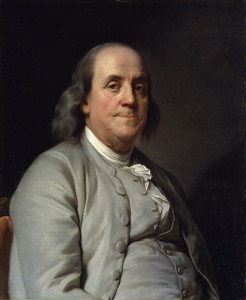
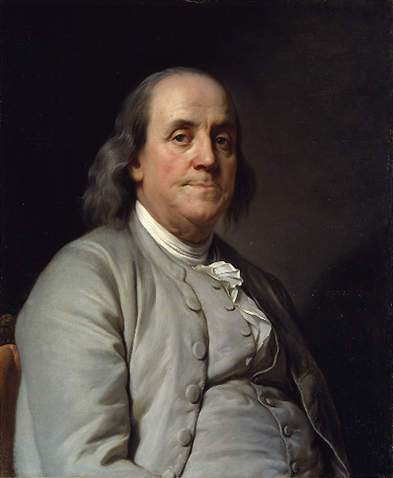
BenFranklinDuplessisNow that I have found a solution to my format problem, I am motivated to work on launching my podcast, which I have tentatively titled: “Ben Franklin’s World.”

I plan to interpret “Ben Franklin’s World” broadly.

Born in 1706, Franklin was a world traveler and consummate learner. Franklin helped found the United States and influenced technological developments after his death.

The podcast will center on early American history. I believe that the spirit of Ben Franklin will allow me to cover important issues in Atlantic History, European History, and North American History between the 17th and early 19th centuries.

I have a lot of work before I release my first episode.

First, I must take the video course I purchased on how to edit, tag, and publish podcast files using GarageBand.

Second, I need to brainstorm a list of interviewees.

Third, I need to schedule and conduct Interviews.

Fourth, I need to create 3-6 months worth of episodes before I release the first 5 episodes.

There are also a lot of other smaller tasks that I must research and do before I launch.

I would like to release my podcast before the end of the year.


What Do You Think?

What do you think about my podcast idea?

Do you like my title “Ben Franklin’s World?” Do you have a suggestion for a different title?

Would you like to help or be on the show?  

Send me an e-mail, tweet, or leave a comment.


*Links to podcasts about podcasts where you will find some fascinating statistics: "Interview with Michael Wolf of NextMarket Podcast" and "Interview with Podcasters Michael Hyatt and Chris Brogan."

 

Getting to the Malleable PhD

AHA2014In January 2014, I participated on the “Getting to the Malleable PhD” panel at the annual meeting of the American Association Historical Association. Jacqueline Jones organized the panel, which consisted of myself, Walter M. Licht (University of Pennsylvania), Ramona Houston (Scholar and Consultant), and R. Darrell Meadows (Kentucky Historical Society).

Each panelist offered a personal narrative.

Some offered policy proposals and critiques about graduate eduction.

I tried to keep my presentation practical.


Recap of My Presentation

I began my talk by offering a couple of confessions:

First, I am still in the process of making my PhD malleable. I do not have any concrete answers for how to make a living as an independent historian, yet.

Second, I have the luxury of being able to take my time and figure out what career path will work best for me because I have spousal support.

My partner Tim has a great job; he works for Google. He is incredibly supportive and has the patience of a saint. Tim helped me through graduate school and now he is content to let me explore how I can create a career as an independent historian. I do not know how I got so lucky in life, but I am grateful for it.

Next, I discussed how I work as an historian and writer and dabble in entrepreneurship.

Finally, I talked about what I wish I had known at the beginning of my transition out of academia.


 lightbulb with graduation hat3 Things I Wish I Had Known When I Started to Leave Academia

1. Nearly every person who leaves academia experiences a similar period of transition

Step 1. Depression and Mourning

Even if you don't want a traditional tenure-track job, most people who leave the academy experience a feeling of loss over their unrealized dream of living the “academic life.”

Step 2: Acceptance and Hope

You emerge from your gloomy phase into one of acceptance.

You recognize the fact that you were not meant to be a "traditional academic" and you have hope that you will be able to follow your passion in a fulfilling way.

Step 3: Exploration

Most of the time you know deep-down what it is you want to do, but few of us will admit it right away, which means many of us will explore different career options.

I explored a lot last year and I am still exploring. Last year, I interned with 2 public history groups and found that I did not want to run a non-profit.

Step 4: Action

You admit what you want to do and take steps to pursue your calling.

Deep-down I knew that I wanted to make a career as a public historian, someone who makes history accessible for everyone through my writing and speaking.

This year, I am experimenting with how I can earn a living from my writing and speaking.


2. Twitter is a great resource for people who want to transition out of the academy

I am still in awe of the generosity of the #postacs, #altacs, and #twitterstorians on Twitter.

Nearly everyone in these communities has a helpful story or advice that they are willing to share with you.

All you need to do is ask.


3. You HAVE transferrable skills

Graduate school was a valuable experience that taught us skills that “real-world” companies and organizations value.

A list of just a few of our marketable skills • Analytical Thinking • Ability to Write • Ability to Synthesize LARGE amounts of information into digestible nuggets • Computer Skills • Research • Project Management • Entrepreneurialism


Conclusion

The above outline represents the information you will find during my segment of the panel, which begins at about 23 minutes 20 seconds.

You will find a lot of value in this video if you are thinking about, or in the process of, leaving academia or if you are a professor thinking about ways you can improve your graduate education program.

You will find that some of the most valuable insights come during the Question & Answer session at the end of the panel.

Please feel free to tweet me, send me an e-mail, or leave a comment if you have questions about how you can embrace your post-academic or alternative-academic life.