Historical Profession

How I Launched My Podcast

PodcastThe wait is over! On Tuesday October 7, 2014, I launched my podcast “Ben Franklin’s World: A Podcast About Early American History.”

In this post you will discover more about the show, its launch, and what I hope the show will accomplish.


The Show

Ben Franklin’s World is a podcast about early American history.

Each episode runs approximately 30-45 minutes and contains an interview with an historian who shares their unique insights into our early American past.

The podcast is intended for a non-specialist audience of history lovers who want to know more about the historical people and events that have impacted and shaped our present-day world.

ben_franklins_worldBen Franklin's World explores the history of early America in its broadest sense. Events in Europe, Africa, the Caribbean, and South America affected the way North Americans lived, dressed, worshipped, conducted business, and exercised diplomacy. Therefore, some episodes of Ben Franklin’s World investigate non-North American peoples and events and the effect they had on the lives of early Americans.

Similarly, episodes span a broad period of time. I intend to help my listeners explore not only the 18th-century world that Benjamin Franklin lived in, but the 17th-century world that brought forth the period he lived in and the early-to-mid 19th-century world that Franklin and his generation influenced.


The Launch

Tuesday, October 7, marked the soft launch of the podcast.

The full release of Ben Franklin’s World will take place in December when I will list the show in iTunes, Stitcher, and Soundcloud, the three major podcast subscription services.

I have chosen a two-step launch for four reasons:

First, I want to bring history to as many people as I possibly can, which means that I need to produce a podcast that releases quality content on a consistent basis.

By delaying the release of my podcast onto the major networks, I am giving myself time to develop a catalog of 8-10 episodes.

Soyuz_fg_22.07.2012Many podcast listeners want to know that a podcaster has invested themselves in their show before they will spend time listening to it. This makes sense given that most podcasters never publish more than 7 episodes. Potential listeners determine a podcaster's investment in their show by the number of episodes available for download and by whether the podcaster has released those episodes on a regular schedule.

By launching Ben Franklin’s World onto the major subscription networks with 8-10 episodes, I will help entice people to give my podcast a try. My 8-10 episode catalog will offer proof that I am looking toward the long term with my show and that I have released content on a consistent basis.

Second, I need time to practice and improve my skills as an interviewer.

Interviewing is a practiced skill just like writing, teaching, and public speaking.

Thus far I have conducted seven interviews and with each interview I ask better questions and grow more comfortable and confident behind the mic. This is important as it increases the quality of the show and helps me grow my audience.

Most podcast listeners will download and listen to your most recent episode before they go back and listen to your earlier episodes. Having 8-10 episodes will allow me to hook potential listeners on an episode that has benefitted from my practice.

Third, the delay gives me time to seek feedback from early listeners.

Early feedback will allow me to tweak and improve the podcast either before or not long after it reaches iTunes.

Fourth, I would like to make a run at the iTunes “New and Noteworthy” section.

The “New and Noteworthy” section provides selected podcasts with free, prominent advertising on the front page of iTunes. Placement in this category would bring Ben Franklin’s World to the attention of countless history lovers.

New podcasts have just 8 weeks to make this section. iTunes determines placement based on show ratings and reviews and number of downloads. The more episodes I release with, the more downloads I will receive as most podcast listeners will download not just one episode, but the entire catalog of a show. I hope to encourage early listeners to help promote the show by giving it a rating and a review.


Show Goals

action plan checkboxI have three goals for the Podcast:

1. Create a broader awareness about early American history.

Do you remember when David McCullough published [simpleazon-link asin="0743223136" locale="us"]John Adams[/simpleazon-link]?

For most of 2001, and into 2002, everyone talked about that book. Even people who seemed to have only a marginal interest in history, picked up and read McCullough’s tome.

I applied to grad school because I wanted to learn how I could get people to talk about history the way David McCullough did.

2. Connect non-specialist history lovers with academic and public historians.

I hope Ben Franklin’s World will create wide public awareness about the fantastic research, books, and interpretive programs of academic and public historians.

3. Lead me to my next big professional opportunity.

I would be disingenuous if I did not share my hope that this podcast will lead me to my "next big thing."

My blog has created so many opportunities for me to speak, write, consult, and meet like-minded historians and writers. I hope the podcast will too.

Perhaps Ben Franklin's World will even turn into a self-supporting enterprise or a profitable endeavor that will support my historical research. Stranger things have happened.


Share Your Story

What is your current or next career endeavor?


*Video of Soyuz rocket launch courtesy of Wikimedia Commons contributor DryominG


5 Ways Public History Institutions Can Use Google Glass

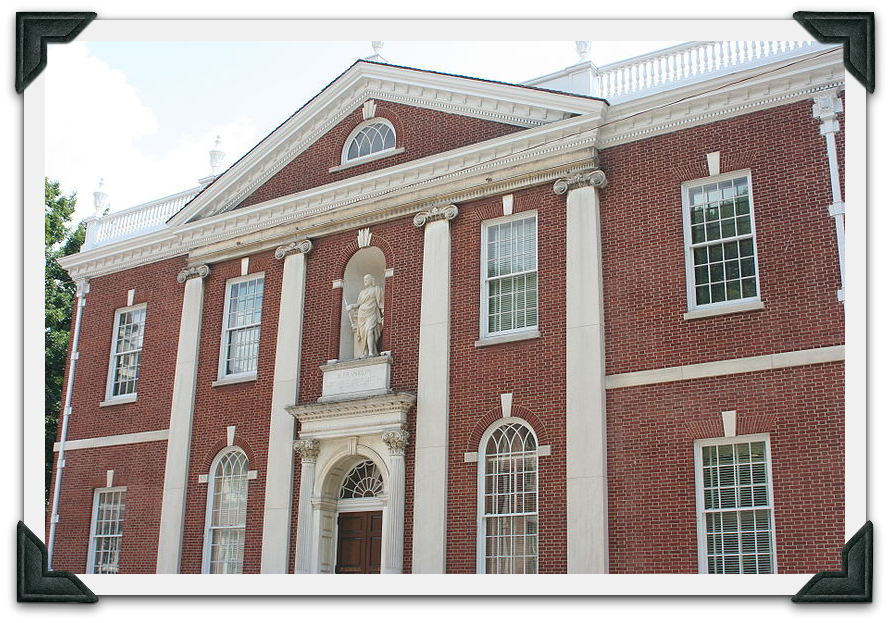
Google GlassOn Thursday, July 17, 2014, I brought Google Glass to the Library Company of Philadelphia at the invitation of its Director, Richard Newman. Our mission: To find out how public history institutions can use Google Glass to enhance and broaden their outreach.

We experimented with Glass for four hours.

In this post you will discover our experiments with Google Glass and the five ways we think public history institutions can use Glass to innovate history interpretation and increase outreach with virtual visitors and school groups.


5 Ways Public History Institutions Can Use Google Glass

After a brief tutorial on how to use Glass, Rich and Nicole Scalessa (IT Manager & Reference Librarian) took staff members around the Library Company to find out how their institution could use Glass to offer visitors a behind-the-scenes look at the Library Company and its holdings.


1. Exhibition Previews

Our first stop took place in the Library Company’s exhibition space.

The Library Company's exhibition “That’s So Gay: Outing Early America" featured panels and cases describing the history of homosexuality and its portrayal in early America.

Rich had a staff member don Glass and follow him around the exhibition space. Periodically, Rich stopped around the exhibit and offered commentary about the panels and objects he and his staff member were looking at.

Rich and Nicole believe that videos taken with Glass offer the Library Company an additional way to present information about their exhibit to virtual visitors. They speculated that they could use this video in conjunction with a blog post that explains the exhibit. Both forms of media would express the same information, but visitors would have a choice in how they want to discover more about the Library Company's exhibitions: print or video.

2. Conservation Demonstrations

As the caretaker of over half a million rare books, manuscripts, pamphlets, and graphics, the Library Company of Philadelphia has an in-house conservation team and a book bindery.

Library Company of PhiladelphiaOne of our experiments took place in the book bindery.

Rich asked one of the book binders if they would wear Glass and provide an explanation of how she helps take care of rare books. The book binder spent the next 10-15 minutes discussing a new technique she used to repair an old English binding.

The book bindery video revealed that Glass videos offer a more personal touch than videos taken with a traditional video camera.

Google Glass takes videos of what you see as you are seeing it; video cameras capture the same footage, but from a less personal vantage point.

The book binder’s video offers visitors the opportunity to feel like the conservator is conducting an one-on-one tutorial of her binding repair technique.

This finding prompted Rich and Nicole to wonder if the Library Company might use Glass to create not only interesting behind-the-scenes footage of the Library Company, but also to create series of informational tutorials that would appeal to different types of visitors; guests who may not know anything about the Library Company vs. those who want to know more about the inner workings of the institution.

The experiment also made me wonder: could an institution such as the Library Company use the intimate way Google Glass captures video to create a series of conservation videos or live demonstrations that they could sell to raise funds to support such work?


3. Intimate Collection Commentary

Rich and Nicole continued to experiment with the intimacy of Google Glass videos.

In another experiment they asked Librarian James N. Green to show and describe one of the Library Company's more recent acquisitions: an early directory of London called The History of London from the Foundations of the Romans to the Present Time.

Jim donned Glass and discussed the significance of the directory. He spoke for 15-20 minutes and in that time imparted valuable information.

Historians use city directories to learn about the people, places, buildings, jobs, and governance of a city in times past. The Library Company's copy of this early London directory is unique in that it is not only a first edition, but its owner (one of Benjamin Franklin's book dealers) wrote commentary about the people, places, architectural styles, and important events described by the directory in the margins around the entries.

Jim equated the directory and its contents as a Facebook-like timeline of the owner's life. For example, near the entry of the great plague, the owner described the experiences of one of his relatives during that dark and troubled time. He also added information about people, places, and events when he felt entries lacked sufficient detail.

Jim's tutorial on the London directory was engaging and informative. Anyone who views his video will feel as though they are standing next to Jim and yet seeing the book as he sees it.

At some point the Library Company may opt to use Jim's video to highlight their acquisition. They could use the video on their website to inform visitors about Library Company's holdings.

They could also include the video in one of their e-mail newsletters and use it as a special thank you to members and donors whose support made the acquisition of the directory possible.


VIP-Pass4. Behind-the-Scenes Tour

Our last experiment with Glass involved a trip to the basement.

The Library Company has one of the oldest, if not the oldest, library card catalogs in the United States. Rich, Nicole, and I took Glass to visit this historic artifact.

Nicole wore Glass and filmed our explorations through the card catalog. We marveled at the sheer size of the catalog and debated its date by the handwriting on the cards.

We explored the catalog as an exercise in how the Library Company and other public history institutions can use Google Glass to offer additional behind-the-scenes content to its visitors and members. The historic card catalog resides in a staff-only area.


5. Live Stream Videos

Although we limited our experiments to video, we did not limit our ideas.

The three of us speculated how the Library Company could use the forthcoming Google Hangouts video conference app to live stream library tours and exhibitions into classrooms.

The ability to live stream video from Glass would open the doors of the Library Company to more than just local school groups.

I also imagine that librarians and archivists could use this app to offer specialized reference help.

When a researcher inquires about a particular manuscript or book, the librarian could pull the book or manuscript and use Glass to offer a live stream of the item to the researcher. The librarian and researcher could then have a live conversation about the book or manuscript while looking at it.

There is no date on when Google will reissue its updated and enhanced Hangouts app for Glass, but possibilities abound for how it will enable institutions like the Library Company to enhance in-person and virtual visitor/researcher experiences and interactions with their institution.


Conclusions

I left the Library Company impressed with Rich and Nicole’s ideas for how public history institutions and museums could use Google Glass to promote their work and enhance (and increase) visitor experiences with their institution.

I had considered how museums might use Google Glass prior my visit, but my early thoughts dealt only with enhancing the way visitors could view exhibits; Glass could help visitors focus on an object instead of the text placard below it.

I imagine this would work similar to QR codes, visitors would scan a code on the object case or placard which would call the information panel into their Glass view screen. Visitors could then look at the object while reading about it.

However, Rich and Nicole have shown me that Google Glass offers public history institutions many different ways that they can enhance visitor interaction and experiences with their institutions.


What Do You Think?

What do you think about the possibilities that Rich and Nicole experimented with?

Can you think of other ways public history institutions could use Google Glass to broaden their visitor outreach and/or enhance their historical interpretation?


"A Day with Google Glass" by The Library Company of Philadelphia

 Montage courtesy of The Library Company's Youtube Channel


5 Must-Have Experiences for History Graduate Students

Must-HaveIf you enrolled in graduate school today, what courses would you take? What experiences would you make sure you had before you graduated?

For the last few weeks I have been reflecting on theses questions.

A prospective graduate student asked me to lunch to learn more about my grad school experiences. He wanted advice about how to apply, what courses he should take, and what experiences he should have while in graduate school.

I gave him advice about what I would do if I enrolled in graduate school today. The advice amounted to five different courses or experiences.

In this post you will learn about the what I think are the five must-have experiences for a history graduate student today.


Disclaimer

I would like to note that I had a fantastic graduate school experience.

I enrolled in a funded program that was focused on collaboration. I also worked with an advisor who took the time to teach me how to write, teach, research, and apply for funding.

My advice does not stem from any deficiencies in my program, but from how technology and the economy have changed over the last decade.


5 Must-Have Courses & Experiences

In my opinion, these are 5 experiences that history graduate students should strive to have while in graduate school.


1. Keep an Open Mind to Non-Academic History Careers

I wish I had kept an open mind to non-academic history careers while in graduate school.

As a grad student, I thought I wanted to be a professor and I had rather strong feelings about an academic career path.

I had entered graduate school with a bit of public history experience; I spent five summers working as an interpretive ranger for the National Park Service in Boston. I respected the work of public historians, but I had decided I wanted to do more research and writing than many public historians get the opportunity to do.

Open MindI attended talks by the public historians my department occasionally brought in, but during each talk I told myself that I wanted to research and write more. I wanted to be like my advisor, someone who conducts serious scholarly work and then volunteers his time to bring that work to public history institutions.

The funny part about my young, naive view: By the end of my fourth year I began having doubts about working as an academic.

In fact, my extracurricular activities suggested that I might be better suited to a career in public history. My frequent presence in the archives led me to volunteer at a couple of the historical societies and museums where I researched.

Even with my volunteer work and doubts, I clung to the idea of an academic career.

My close mindedness prevented me from seeking internships and volunteer opportunities that could have helped me land a public history job.

When I finally admitted that I did not want to be a traditional academic (ca. 2011/2012), I had missed my opportunity to prepare for the public history job market.

The public history job market is just as competitive as the academic job market and, despite what many professors had told me, most public history institutions do not want to hire traditionally-trained historians.

What type of historian do they want?

My experience has been that public history institutions want candidates with experience in creating digital exhibits, some background in nonprofit management and donor cultivation, and experience, or at least knowledge, of how to apply for institutional grants. The ability to do traditional historical work, i.e. research, writing, analysis, and interpretation, is a bonus.

This realization leads me to recommend the next two graduate school experiences.


2. Find an Internship in Non-Profit Development

Graduate students have a lot of work, but I wish I had found a way to intern in the business or development office of a nonprofit.

An internship in a nonprofit development office would have allowed me to enhance and develop skills in donor cultivation, customer service, accounting, and applying for institutional grants. These are transferrable skills that would allow anyone who had them to compete for jobs with nonprofit organizations as well as for positions within in big corporations or small businesses. These skills would also come in handy for any historian who wants to start their own business.


DH Historian3. Take a Digital Humanities Course or Seek an Internship with a DH Project

Digital humanities is the way of the future.

DH projects vary from helping scholars make sense of large amounts of data to websites that make history more accessible to non-specialized audiences.

Digital humanists perform important work.

Experience in DH helps historians become better and more well-rounded scholars. In my experience, digital humanists have a knack for looking at data and the ways scholars can contextualize it in ways that differ from non-digital humanists.

Additionally, many DH projects lend themselves well to acquiring new and transferrable skills in computers and technology; skills historians can use to apply for different types of academic and non-academic work.


4. Develop Social Media Skills

Today, I blog, tweet, and hold conversations on Google+. However, I did not develop a fluency in social media until after graduate school.

If I enrolled in graduate school today, I would devote a bit of time to developing social media skills.

Why?

3 Reasons:

1. Social media makes scholars more productive.

Historians who blog tend to write more than scholars who don’t blog.

Blogging also helps scholars think through and develop their ideas. The act also helps them develop a regular writing practice.

Many of us take thinking and writing for granted, but they are skills that get better and sharper the more we do them.

If I were to enroll in graduate school today, I would look into forming or joining a group blog like The Junto. Group blogs provide all of the benefits of blogging, but spread out the work of blog maintenance.


Social Media2. Social media makes scholars more collaborative.

Whether you blog about an idea for your dissertation or tweet a question about a source, other scholars will find you and help you develop your ideas or find the source you seek.

Of course, being a social and collaborative process, you will get as much out of social media as you put into it. The more you converse with and help other scholars with their questions or ideas, the more you will benefit from scholars commenting on your work.


3. Social media will help you build your platform.

Being an active blogger, Facebook poster, or tweeter will help raise your profile among others who share your interests.

Social media can help you position yourself as a thought leader in your field or subfield.

Opportunities come to thought leaders by way of jobs, interview requests (which will enhance and raise your profile more), speaking opportunities, and possibly even book deals.

At the very least, social media can help you develop a following that will help you get a book contract; followings mean that you can market your books to hundreds, if not thousands, of potential book buyers.


5. Attend More Conferences

Conferences provide opportunities to network with other scholars and to learn about new scholarship.

Conferences can be expensive, but they provide invaluable networking opportunities.  Attending a conference may help you find an outside member for your dissertation committee, a potential reference for a job, grant, or internship opportunity, or a possible project collaborator.


Conclusion

The job market has changed a lot in the ten years since I enrolled in graduate school. My Five Must-Have Experiences are based on my graduate school and post-graduate school experiences.


Thoughtful-WomanWhat Do You Think?

If you were to enroll in graduate school today, what courses would you look to take or experiences would you look to have?

If you are enrolled in graduate school today, what course are you looking to take and what experiences would you like to have?


Representing and Resisting Violence: African Americans, North African "Pirates," & Violence in the Early Republic, SHEAR 2014

SHEARWelcome to part 1 of my recap of the 2014 Society for Historians of the Early American Republic conference. The conference took place in Philadelphia, Pennsylvania between July 17 and July 20.


“Representing and Resisting Violence: African Americans, North African “Pirates,” and Violence in the Early Republic”

Chair: James Brewer Stewart (Macalaster College)

Panelists:

Kathleen Kennedy (Missouri State University), “Trauma and Narratives of Slavery”

Kelly A. Ryan (Indiana University Southeast), “Seeking Justice: African American Resistance to Violence in the Northeast, 1780-1830”

Jason Zeledon (University of California-Santa Barbara), “American Manhood and the Barbary Pirates: Gender, Sodomy, and Women’s Rights during the Algerian Captivity Crisis”

Comment: Nikki Taylor (Texas Southern University, Houston)


Panel Summary

"Trauma and Narratives of Slavery"

Kathleen Kennedy explored how historians can use the narratives of slave men to explore the psychological trauma of slavery.

Kennedy began her paper with the story of Henry Bibb, a former slave who discussed being the father of slaves. Bibb fathered a daughter and swears that it will be the only child he ever fathers into slavery.

For Bibb the word “father” was “obnoxious.” Early American men defined their masculinity by their ability to provide for and protect their wives and children. Slave husbands and fathers could not protect their families because they had no rights over them; they had to watch while overseers and masters abused their wives and children.

Family of Slaves in Georgia 1850Kennedy contends that historians can use statements of grief by slave fathers to better understand slave grief and the violence of slavery. However, Kennedy warns that African-American writers did not always bear all in their narratives.

Former slaves like Henry “Box” Brown understood that their readers had expectations for what a slave narrative should read like. Readers expected to read about some of the blood and torture of slavery, but they did not want to read about the mental traumas that slavery inflicted. Therefore, writers like Brown could not represent the pain that they suffered as fathers—the pain of having to watch their wives and children beaten, raped, or sold.

Historians must also read slave narratives with an eye to what they do not say. Grief is the act of remembering while trauma is the act of forgetting. Trauma represents an inability to articulate true feelings, which is an endemic problem in all slave narratives.

Gender also played a role in how slaves experienced slavery and its traumas. Kennedy illustrated this point by examining the narratives of Harriet Jacobs and her brother James. Harriet discussed how she was not allowed to attend the funeral of her father Elijah. She remembered him as a man who taught her dignity. On the other hand, James describes Elijah as a man, but not a man. Elijah Jacobs had no authority. James Jacobs’ narrative also shows how enslaved men struggled with their conceptions of manhood.

Kennedy opted to skip over how enslaved people thought of their white fathers in order to use her last few minutes to discuss how enslaved men saw their role as fathers. Kennedy has found that slave men often talked about their decision not to become fathers or how they lived as fathers without authority; fatherhood brought slave men great joy, but this joy was tempered with great anxiety.

Former slave writers spoke about their children because they wanted their audience to know that they loved them. Today, the notion of parental love seems obvious, but in the 1840s and 1850s, these former slaves needed to make that point clear: To love is to be human.

Kennedy concluded her paper with a problem: Historians need to figure out whether slave men were really men. She suggested that we need to look for something other then progressive narratives because the trauma of slavery continued into the former slaves’ freedom. Freedom was not a happy ending, there was no happy ending to slavery. She suggests accounting as a way that historians might be able to better account for the trauma and grief.


"Seeking Justice: African American Resistance to Violence in the Northeast, 1780-1830"

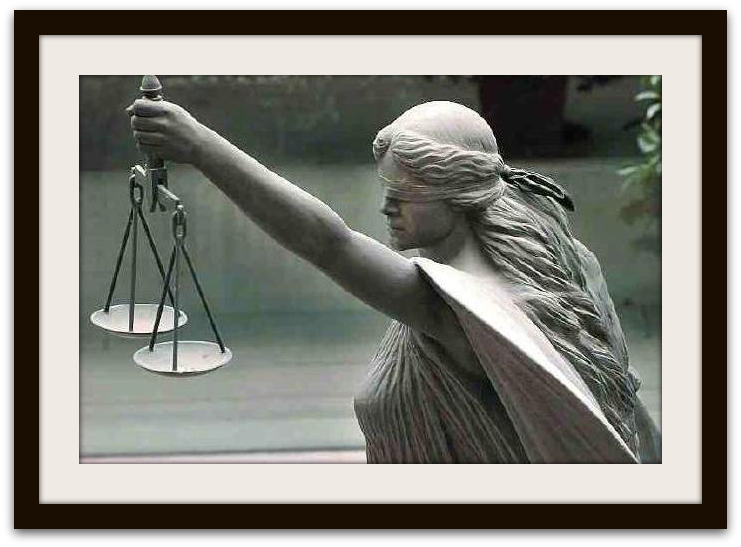
LadyJusticeImageKelly A. Ryan: African Americans used the judiciary to advocate for their safety and security and to lay claim to, promote, and defend their rights as citizens.

Ryan contends that her investigation reveals another aspect of the burgeoning civil rights movement that emerged after the Civil War.

Ryan acknowledged the difficulties of investigating African American use of the judicial system. Many crimes went unreported and it can be hard for historians to identify race in legal records. With that said, Ryan has found many cases where African Americans brought suit against white defendants or cases where white plaintiffs brought suits against other whites for the injustices they perpetrated against African Americans.

African Americans wanted to bear witness in court. The act of testifying gave blacks a sense of their citizenship rights and as such they wanted to appear as respectable witnesses, especially against whites. Ryan reminded the audience that African-American witnesses faced ramifications for their testimony. White defendants or their friends might retaliate against black witnesses and their families.

Ryan found that whites played an important role in African-American court cases, especially in lawsuits brought to the court by African-American defendants. In many cases, the indictment records kept only white testimony. In some places blacks could not bring suits in their own names, so whites had to bring them to court on their behalf. This made it important for African Americans to identify white allies; African Americans were fully aware of the world they lived in and the reality of its discriminations.


"American Manhood and the Barbary Pirates: Gender, Sodomy, and Women's Rights during the Algerian Captivity Crisis"

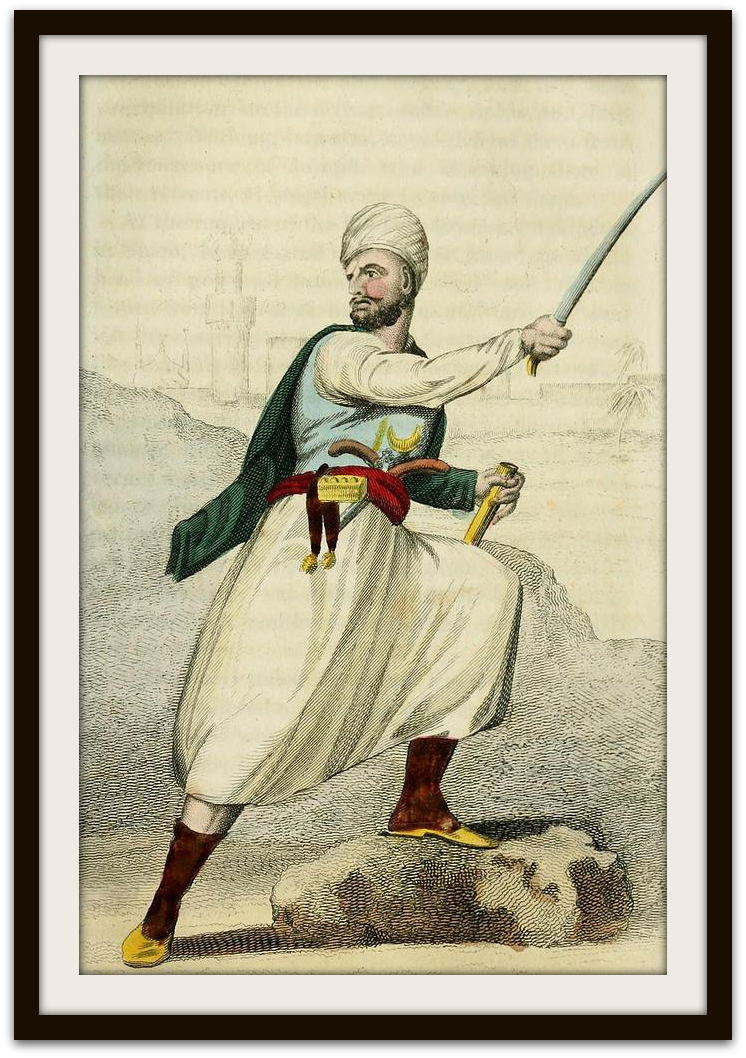
Barbary PirateJason Zeledon contends that the legacy of the Barbary Conflict extends well beyond the various military skirmishes. The conflict shaped the way Americans saw themselves and North Africa.

Zeledon’s paper focused on 2 key ways that the Barbary Conflicts shaped American identity:

First, the conflict shaped and hindered the women’s rights movement in the United States.

Second, literature about the Barbary states shaped the United States’ diplomatic response to the conflict.

American literature about the Barbary states and captivity narratives portrayed Algerian men as sexually adventurous, men who preferred having sex with other men. This meant that American sailors not only faced hard, manual labor, but sexual abuse and exploitation if captured by the pirates.

The American view of Algerian men as “sexually adventurous” also led Americans to believe that the pirates could be defeated easily because Algerian men were lazy and inferior to American men.

American literature about the Barbary Conflict also hindered the American women’s rights movement.

American narratives about Algerians described Algerian men as cruel and abusive toward Algerian women. Algerian men never allowed their women to eat with them because they felt them inferior. They also believed that women lacked souls.

When American men read these narratives they praised their treatment of their American wives and daughters. Therefore, American men saw no need to help women promote their rights; compared to Algerian women, American women had a lot of rights and freedom.


Panel Comment

Nikki Taylor offered the official comment for the papers. She stated that the 3 papers raised many points that historians need to consider.

Kathleen Kennedy’s work shows us that we often try to define black manhood in terms of white manhood. White manhood does not adequately define or explain black manhood during the period of slavery. Taylor would like to see historians expand their definitions of manhood so we can more accurately describe the masculinity of African American slave men .

Kelly A. Ryan’s work illuminates the new study of African-American criminality. Taylor would like Ryan and other historians who work in this new field to answer several questions: 1. What triggered anti-black collisions where whites attacked blacks? 2. To what extent did African Americans experience success in their use of the justice system? 3. Who were the white witnesses? Why did they stand up for their black neighbors? Were they really black allies? And did they lose some of their whiteness by standing up for blacks?

Jason Zeledon raises excellent points about how early Americans perceived Algerian men and women. However, Taylor wants Zeledon to think more about the gendered natures of Barbary Warfare rhetoric. Specifically, Taylor asked Zeledon to consider how stereotypes are constructed and to do more to illustrate his thesis about women’s rights.


ThinkWhat Do You Think?

What do you think are the most interesting points raised by these papers?


How Historians Can Re-purpose Conference Papers & Lectures

Otis RepurposeHistorians spend a lot of time writing conference papers and lectures. Often we use this content to serve a singular purpose and then we forget about it.

But what if you could turn your conference papers and lectures into something more? Something that helps you promote your work and generate more interest in it?

In this post you will learn how you can repurpose your conference papers and lectures into video and audio content that will build your platform and help you reach a wider audience.

How to Reach a Wider Audience

A great time slot on a conference program may allow as many as 50-100 people to hear your paper. Often attendance will be less than that.

You may experience similar attendance for one of your public talks or lectures.

But what if you could repurpose and reuse the material in your conference papers and lectures to reach a wider audience with minimal work, would you do it?

Technology has made it possible for you to make all of the content you produce accessible to a wider audience.

You could transform your conference papers and lectures into blog posts, feature articles for online and print newspapers and magazines, podcast episodes, or educational videos. All of these mediums will help you spread word about your work to a wider audience.

In particular, videos and podcasts make up some of the most shared media on the internet. These media types will help you attract an audience who loves history, but doesn't necessarily have time to read or the ability to attend a conference.


Video ContentCreating Video Content

Using software like Screenflow or SlideShare and a lavalier microphone, you could record your conference papers or lectures as you give them.

You could also use these tools to record your work from the comfort of your home or office.

Software like Screenflow captures whatever you show on your computer screen.

A lavalier microphone clipped to your blouse or lapel will capture your voice as you deliver your paper or lecture. You can use this audio recording as a podcast episode and/or add it to your Screenflow or SlideShare file to create a narrated slide show presentation.

Uploading this audio and video content to your website will make it accessible to all of your followers, students, colleagues, potential publishers, and other people interested in your work.

You can also link this content to your web-based CV or resume to draw attention to your capabilities as both a scholar and a public speaker, a great resource for those interested in hiring a speaker.


Example

Below you will find a video recording of “Memory, Community, Loyalty: Albany, New York, 1763-1776,” the paper I presented at the 2014 Conference on New York State History. I recorded the video using Screenflow and a [simpleazon-link asin="B00BHN05H2" locale="us"]Rode Smartlav Lavalier Microphone[/simpleazon-link].

I have posted the video of my paper with 3 goals in mind:

1. To provide people who did not attend my panel with the opportunity to hear my paper.

2. To spread the reach of my work.

YouTube is a powerful search engine. By uploading and tagging my video with relevant search terms, I hope to increase awareness about my research using the power of Google and YouTube search.

When people search for Albany, New York, the American Revolution, the French and Indian War, the British Empire, the British Army, or the fur trade, perhaps Google and YouTube will present my video as an option.

3. To enhance my online CV.

I have linked the title of my conference paper to this video so that anyone who peruses my online CV can view my presentation.


Thoughtful-WomanConclusion

Historians spend a lot of time creating conference papers and lectures. By repurposing this content into audio and visual presentations we will increase the likelihood that interested persons will find out about us and benefit from our research.


What Do You Think

Do you repurpose your conference papers and lectures? If so, how? 


"Memory, Community, Loyalty: Albany, New York, 1763-1776”