Historical Profession

5 Reasons Why You Should Research at the David Library of the American Revolution

Do you (or your students) study the American Revolution? Would you like to save and receive funds for your research?

In this post you will learn about the David Library of the American Revolution, its research fellowship for graduate students and post-doctoral scholars, and its award for undergraduate research.


DLAR LogoBrief Overview: The David Library of the American Revolution

The David Library of the American Revolution (DLAR) supports and promotes the study of the American revolutionary era ca. 1750-1800.

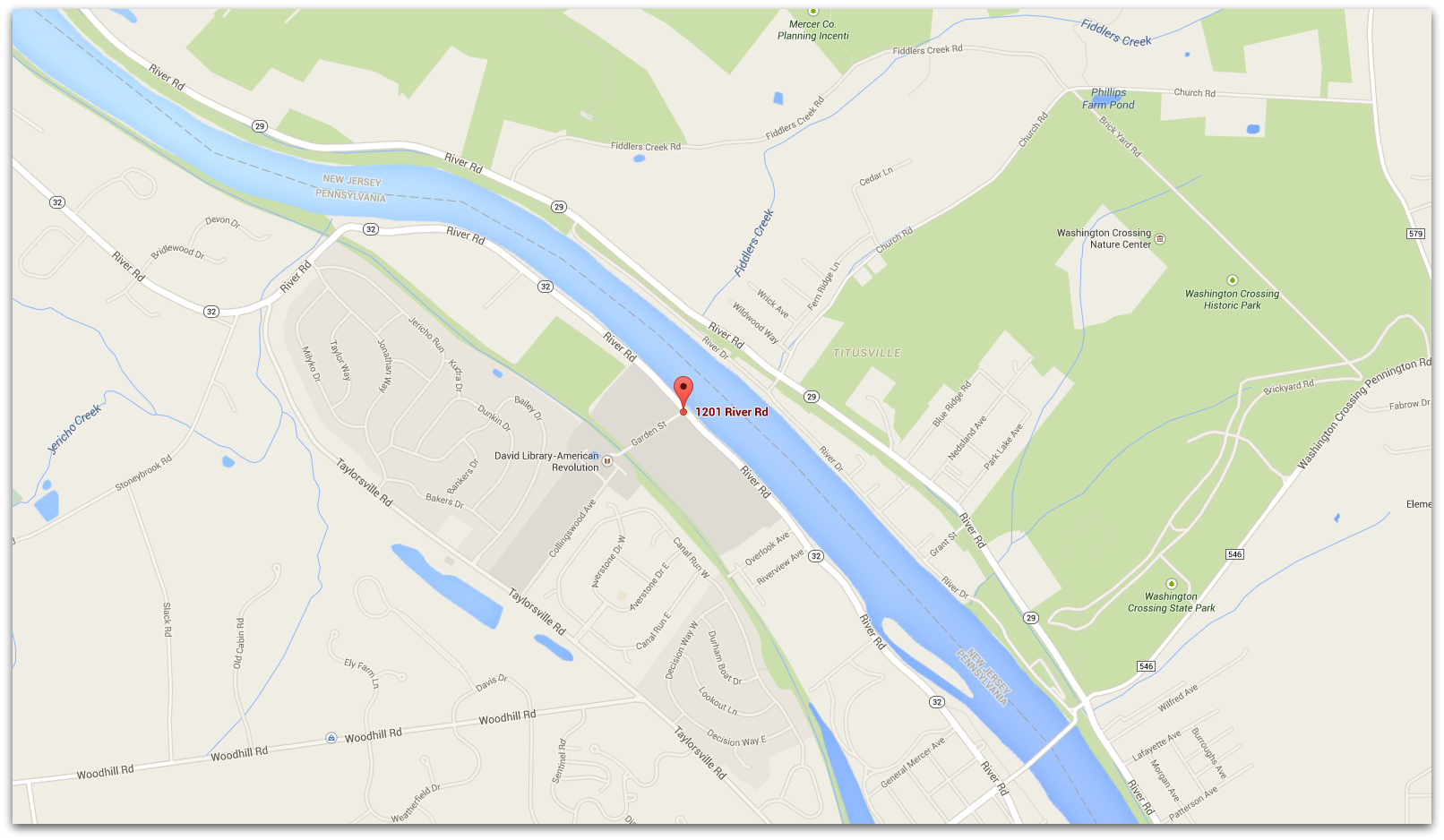
Businessman, philanthropist, and revolutionary-era enthusiast Sol Feinstone (1888-1980) founded the David Library in 1959; he named the institution after his grandson David Golub. Feinstone began the DLAR with his extensive, private collection of revolutionary-era manuscripts. In 1974, he built the present library and auxiliary buildings on his 118-acre farm in historic Washington Crossing, Pennsylvania and opened them to the public.


5 Reasons Why You Should Research at the David Library

Below I provide my top 5 reasons for why you should study at the David Library of the American Revolution.

The first 3 apply to anyone who researches the American Revolution. Reasons 4 & 5 discuss two perks of being a DLAR fellow.


1. The Collections
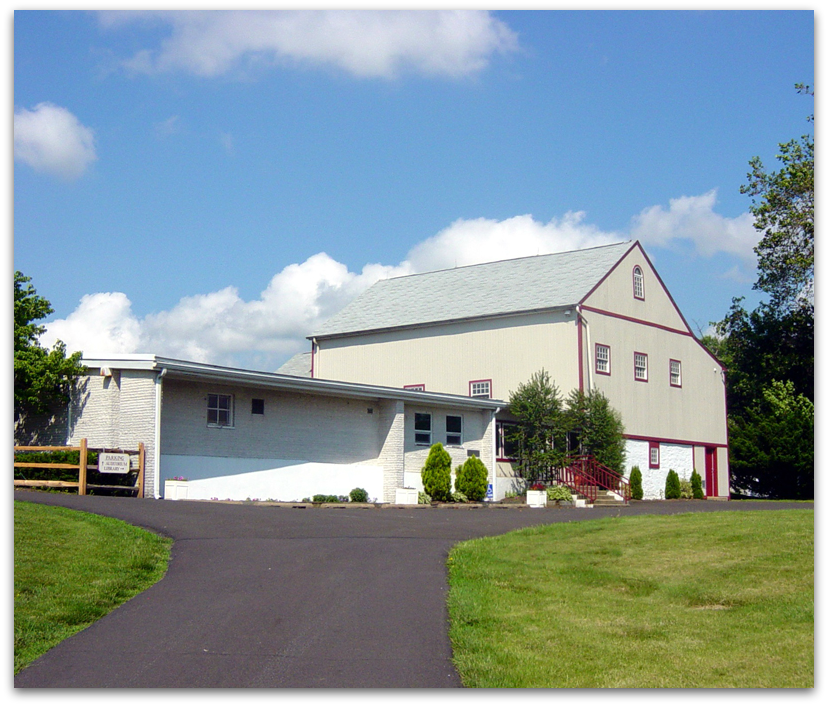
DLAR LibraryThe David Library possesses “all [of] the basic primary sources” on the American Revolution and its War for Independence.

The Library also holds records that speak to the French and Indian War and the early republic United States.

The DLAR has acquired materials from around the world; the library has over 10,000 reels of microfilm in its collection.

Rather than undertake expensive and time-consuming travel across the United States, Canada, Great Britain, and France, researchers will find nearly all of the information they seek within the printed, manuscript, and microfilm collections of the David Library.

Don’t believe me? Take a look at their “Guide to Microfilm Holdings.”


2. Knowledgeable Staff

Librarian Katherine A. Ludwig knows the collection.

If you study the American Revolution, you should contact Kathie and spend a few minutes describing your project and the information you seek. Within minutes she will point you toward records and correspondence that you either did not know existed or that you thought you would spend thousands of dollars on overseas travel to find.


3. Scenic and Historic Location

Few archives offer as much complementary, scenic inspiration for their subject matter as the David Library.

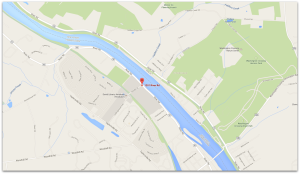
Sol Feinstone’s 118-acre farm overlooks the Delaware River near the spot where George Washington crossed for his surprise attack at Trenton and Princeton, New Jersey on December 25/26, 1776.

Whenever you need to peel your dry, tired eyes from the books and microfilm you have spent all day reading, you can take a walk around the farm or along the Delaware River to recharge your spirit, mind, and eyes.
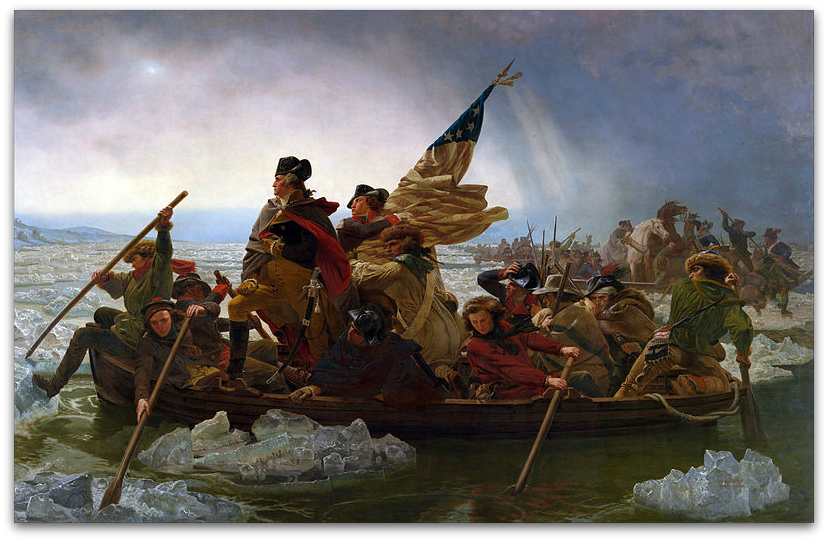
Washington Crossing the Delaware


4. Fellows Get 24/7 Access to the Library

Are you a night owl who yearns to research at 3am when your mind is at its best?

The David Library opens for public research Tuesday through Saturday, 10am-5pm. But, if you apply for and receive one of their fantastic fellowships, you will have access to the library and its holdings any day or time you want.

The David Library is always open to its fellows.
 

DLARR Farmhouse5. Housing and the Customizable Social Experience

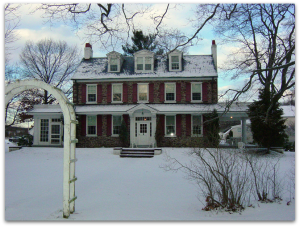
The David Library offers its fellows a room in Sol Feinstone’s farmhouse as part of their fellowship.

Fellows work with Chief Operating Officer Meg McSweeney to schedule their month-long research residency. Upon submitting the dates you would like to work at the David Library, Meg will advise you as to how many other fellows plan to be in residence during the dates you provide. This information will allow you to customize your experience.

Scholars who prefer solitude will be able to select a time when few other scholars will be in residence. Historians who love to work amid the company of other scholars can choose a time when several scholars plan to be in residence.


Doctoral and Post-Doctoral Fellowships

Fellowship Term: 1 Month Award Amount: $1000-$1600 plus housing Who Can Apply: Doctoral Candidates and Post-Doctoral Scholars Due Date: March 7, 2015

The David Library expects to appoint approximately 8 fellows for 2015-2016.

Zemanta Related Posts ThumbnailThe David Library Academic Advisory Council is an open-minded body that seeks applicants who study history, Africana studies, gender studies, women’s studies, political science, religion, law, geography, or any other area that the DLAR collections support research in.

Application Materials: Application materials include 6 copies of a research proposal, CV, and writing sample plus 2 letters of recommendation.

DLAR Fellowship Application


Undergraduate Research Fellowship

First Place Award: $500 Second Place Award: $250 Third Place Award: $150 Entry Deadline: June 30, 2015

New for 2015: The David Library of the American Revolution just announced its brand-new Omar Vázquez Prize for Excellence in Undergraduate Research.

Any undergraduate enrolled in an accredited 4-year college or university in the United States may apply for this award. To apply, they must submit a research paper (up to 30 pages) written as a requirement for an American history or Early American Studies course during the 2014-2015 academic year. The paper may cover any area related to early American history circa 1750 to 1800.

The DLAR Academic Advisory Council strongly encourages any student who has made use of DLAR collections to apply.

Application Materials: 1 paper up to 30 pages in length, written in English, and formatted with double spacing, 12 pt. Times New Roman font, and Chicago Manual of Style foot or end notes. Applicants should also include a Works Cited page, which will not count toward the 30-page limit.

Applicants who wish to submit a portion of their undergraduate thesis may do so, but must include a table of contents in addition to all of the above (table of contents will not count toward 30-page limit).

Visit “Omar Vázquez Prize for Excellence in Undergraduate Research” for more details and submission requirements.
 

Google Map of DLARConclusions

In 2008, I had the honor to be a fellow at the David Library of the American Revolution. It was one of my best, and most unique, fellowship experiences.

My trip to the DLAR saved me time and money. Kathie Ludwig helped me access records that I would have had to travel all around the United States, Canada, and Great Britain to read.

My DLAR fellowship also helped me to extend my educational experience beyond my historical research.

Being a rather social person, I opted to visit when many other scholars were in residence. My interactions with these scholars not only helped me network with senior colleagues, but it allowed me to learn from their knowledge and experiences.

All of the other fellows I encountered helped me locate collections that might be helpful to my research. They also shared invaluable information about how they obtained their academic jobs, why they thought they had yet to be successful in their pursuit of a tenure-track position, how they published their first books and articles, and information about other archives that would benefit my research.

The presence of these scholars enriched my mind and relieved my scholar’s solitude— that feeling of loneliness many of us experience when we leave our families for weeks at a time to spend hours with books, manuscripts, and microfilm records.

I enjoyed my fellowship experience at the David Library of the American Revolution immensely.

 

Thoughtful-WomanNote for Independent Scholars

I held my fellowship at the David Library as a graduate student, but my experiences with the DLAR, its staff, and previous fellows has left me with the impression that the David Library Academic Advisory Council would welcome and seriously consider applications from independent scholars who hold doctorates.


What Do You Think?

What are your favorite libraries and archives?

Do they offer fellowships for historians?


*Pictures of DLAR Farmhouse & Library building courtesy of the David Library of the American Revolution.

 

Additional Highlights from the Fear in the Revolutionary Americas Conference

FearWhat role did fear play in the revolutions of North and South America between 1776 and 1865? On Tuesday, November 18, 2014, I contributed a post to The Junto: A Group Blog on Early American History that offered some  highlights from "'Fear in the Revolutionary Americas Conference,'" a one-day conference hosted by Tufts University on Halloween.

In this post I offer you recaps of two more of the papers presented at “Fear in the Revolutionary Americas, 1776-1865.”


“Republics of Saints? Fear and Virtue in the Age of Revolutions”

Nicole Eustace (New York University) believes that we need to study the language and contents of the Federalist Papers to understand the absence of fear in American constitutionalism.

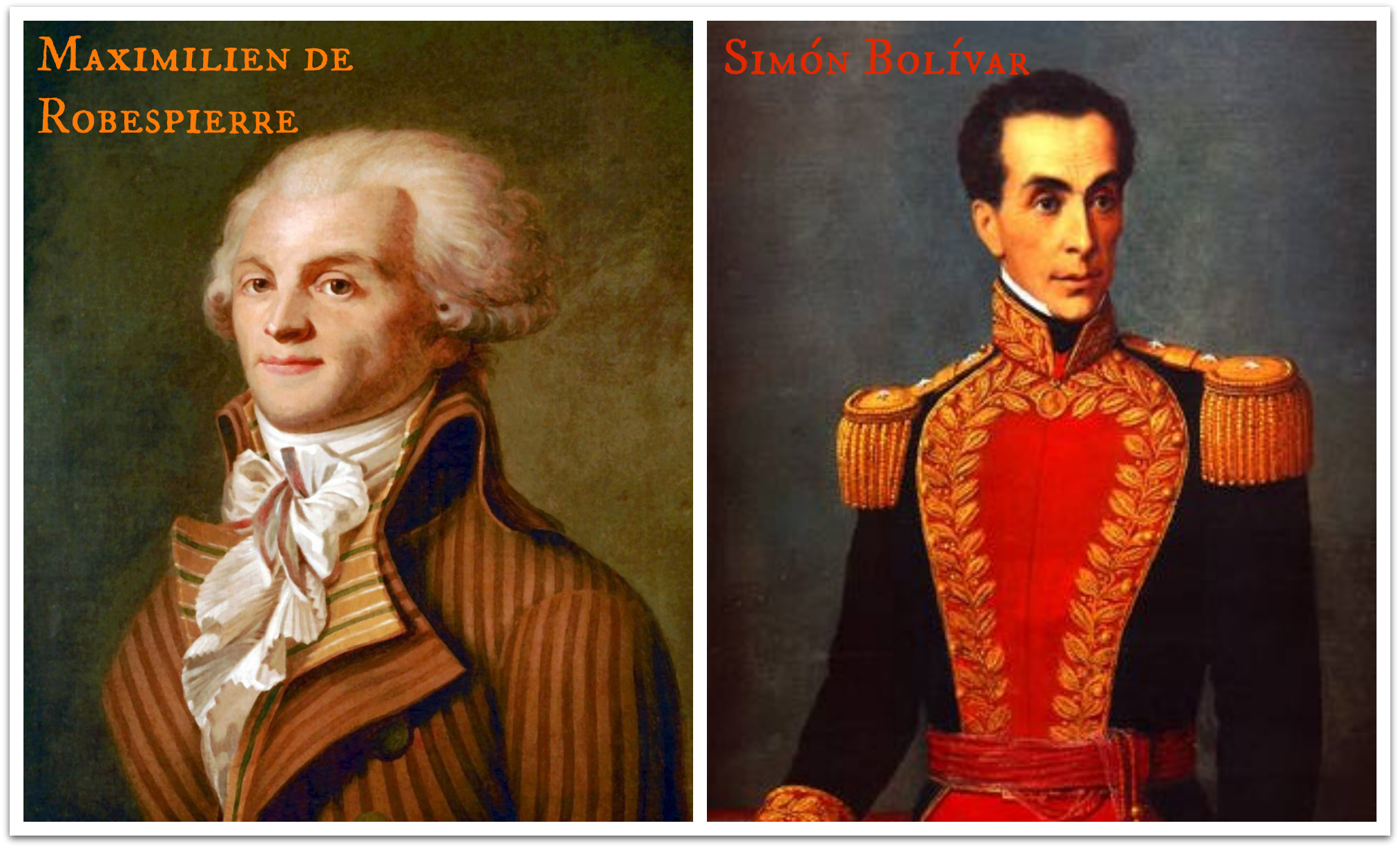
Eustace posited that emotional language provides a key metric that historians can use to assess contemporary perceptions of fear and power. She explored the language of fear and virtue as used by Maximilien de Robespierre and Simón Bolívar to illustrate her point.

Equality, fear, and virtue played important roles in Robespierre’s republicanism.

Robespierre believed that a virtuous society would develop when its members submerged their self-interest in favor of the entire society. The power of self-interest ensured that societies were hard to create.

Robespierre believed that a populace must experience fear in order to become virtuous because only fear had enough power to overcome self-interest.


Robespierre and Bolivar

Like Robespierre, Bolívar believed that only virtuous societies could govern themselves.

Unlike Robespierre, Bolívar understood virtue as a cultivated trait. He ended slavery in Venezuela in an effort to cultivate virtue among his fellow Venezuelans.

Bolívar viewed slavery as immoral and as virtuous societies did not suffer from failures of morality, he could not build a virtuous society capable of self-governance with the institution of slavery in tact. With slavery abolished, Bolívar hoped to develop a sense of racial equality. He wanted to create a new branch of government dedicated to the cultivation of virtue and morality, but it never materialized.

Robespierre and Bolívar developed their definitions of virtue, virtuous societies, and how to create republican societies partly in response to the “fearless” republicanism of the United States.

Rather than use fear, the authors of the Federalist Papers used sympathy to persuade their fellow Americans to adopt the republicanism proffered by the Constitution of 1787.

Using the language of sympathy Alexander Hamilton, John Jay, and James Madison described a federal government that would be sympathetic to the people because it understood that self-interest would always overpower virtuous self-denial.

The framers understood that man had vices, but argued that Americans did not need to be perfect in order to govern themselves; the failure of human virtue should not mean the need for the shackles of despotism. Therefore, the government offered by the Constitution limited self-interest by imposing term limits and requiring frequent elections to keep the government sympathetic to the people and their changing needs.


“Wars to the Death: Annihilation and Identity in Spanish America’s Independence Era”

Karen Racine (University of Guelph) offered an overview of the development of the “War to the Death” mindset and its use in revolutionary Haiti and Venezuela.

The phrase “War to the Death” implies that something apocalyptic will happen because one group will live and the other will die. It also describes a fundamental part of the enemy’s identity that must be annihilated.

Racine noted the existence of many examples of “War to the Death” calls to action throughout history and provided the example of Punic Wars to prove her point. Every Roman statesman who discussed the wars ended their speech with “Carthage Must Be Destroyed!”

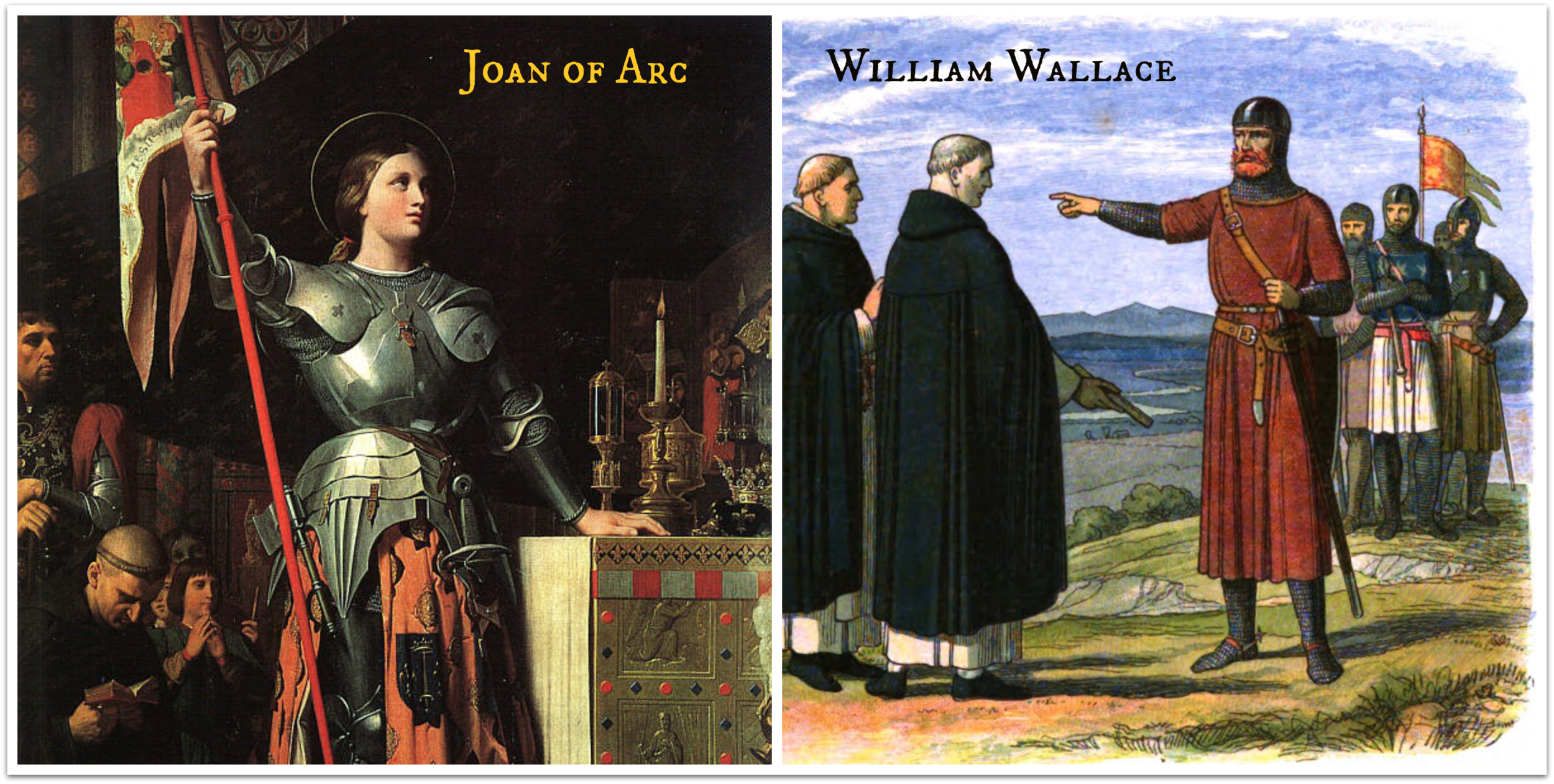
Racine also acknowledged that over time the West came to link the “War to the Death” ideal to individual martyrdom for national liberation.  Joan of Arc and William Wallace fit this understanding.

Joan of Arc and William Wallace

Racine argued that fear and annihilation comprised a central and intrinsic part of nation building during the age of Revolutions, especially in Latin America.

During the Haitian Revolution, Jean-Jacques Dessalines told his countrymen that he ascribed to the motto “War to the Death of Tyrants!”

Between January and April 1804, Dessalines led his fellow Haitians in a genocide of the petits blanc, white Haitians. He affected the genocide by using the black islanders’ fear of the whites; Dessalines described white Frenchmen as inhuman and urged his fellow Haitians to erase their footprint from their island.

Similarly, in 1810, Simón Bolívar proclaimed “Down with Tyrants!” He promised to kill any Spaniard or Canary Islander who refused to embrace the independence of the Americas.

Both Dessalines and Bolívar instituted a nationalism of negation among their countrymen because the “War to the Death” ideal rallied support by defining peoples more by what they are not than by what they are.


Conclusions

The eight scholars who presented at “Fear in the Revolutionary Americas, 1776-1865” made a strong case for why historians need to consider the emotional side of the revolutions and historic events we study.

Emotions drive how people act and, as these scholars demonstrated, fear served as a strong motivator, or instigator, of actions during the age of American revolutions.


The Confederate Raid of St. Albans Vermont

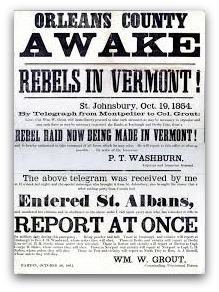
Raid PosterDid you know that a unit of Confederate soldiers invaded Vermont during the Civil War? I didn't.

On October 15, 2014, I attended a talk by J. Kevin Graffagnino about the Confederate raid of St. Albans Vermont in October 1864.

In this post you will discover details about the St. Albans Raid as well as the valuable lesson the raid taught Graffagnino about researching and writing history.


Origins of Research

Since November 2008, J. Kevin Graffagnino has served as the Director of the William L. Clement Library at the University of Michigan. Prior to 2008, he held curatorial and administrative posts at the University of Vermont and the Historical Societies of Vermont, Wisconsin, and Kentucky.

As a native Vermonter, Graffagnino became interested in the St. Albans Raid as a child. His work at the University of Vermont and the Vermont Historical Society allowed him to conduct in-depth research about the raid from the Vermont point of view. His position at the Kentucky Historical Society gave him the opportunity to return to the raid and look at it from the Kentucky point of view.


The St. Alban’s Raid: An Overview

vermont MapThe St. Albans, Vermont raid stands as the northernmost military action during the Civil War.

The raid took place on October 19, 1864 and it was led by a young Confederate calvary officer named Bennett Henderson Young.

The raid had strong Kentucky roots. In addition to Young, many of the Confederate soldiers who participated in the raid hailed from Kentucky.

Although the state government of Kentucky remained neutral throughout the war, many of its residents chose sides: Five times as many Kentuckians joined the Union Army than the Confederate Army.

In 1864, the Confederate Army sent 1st Lieutenant Bennett Young to Canada to reconnoiter the northern landscape of the U.S.

Canada did not take sides during the American Civil War. The country allowed civilians and soldiers from both the Union and the Confederacy to enter its borders to secure supplies or safety.

Young accepted his mission gladly. He wanted to punish New England for its role in the war and for the devastation its Union soldiers had wrought throughout the South. Young did not think it fair that nearly every community in the South lived in fear of wartime violence while most in the North lived without such fear, especially those in New England.

Young focused his attention on the northern borders of Vermont. Vermonters had been among the most vociferous opponents of slavery and the Confederacy.

In October 1864, Young met with Confederate leaders in Toronto. He told them that he intended to attack St. Albans, Vermont, a town in the northwest corner of the state.


Why St. Albans?

St. AlbansSt. Albans made a perfect target for three reasons:

1. Railroad Hub: St Albans served as the headquarters for the Central Vermont Railroad. As a railroad hub, the residents of St. Albans were used to seeing out-of-town travelers. This fact would allow Young and his men to infiltrate the town with a minimum of suspicion.

2. Money: As a railroad hub, St. Albans was a relatively prosperous community. Its three banks would have money in its vaults that Young and his men could secure and send back to the Confederacy.

The Confederate Army wanted Young to bring the horrors of the Civil War to New England. Young's attack was designed to unnerve the Yankees and make them live in fear that Confederate raiders might attack them at any moment. However, Young’s primary missions seems to have been to secure financial assistance for the Confederacy.

3. Location: Located in the northwest corner of the state, Young and his men could infiltrate St. Albans and make their way to the safety of Canada in short order.


The Raid

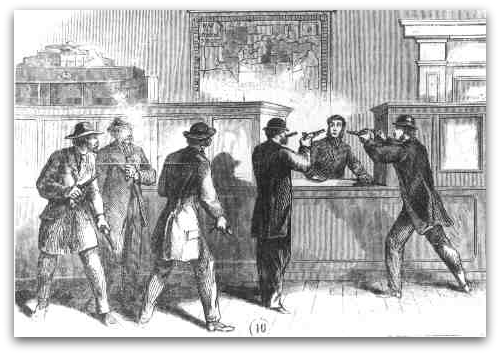
St. Albans RaidTwenty-two Confederate soldiers took part in the raid, including Young.

The twenty-two men arrived in St. Albans either alone or in pairs over several days. They stayed in different hotels as not to arouse suspicion. Their plan worked, no one in St. Albans suspected their plan.

The raid began at 3pm on October 19, 1864.

The Confederates divided into three different groups and each group entered a different town bank. In each bank, the Confederates raised their pistols and told the tellers and customers that they were Confederate soldiers who had come to take St. Albans and its money for the Confederacy.

The raid lasted 25-30 minutes.

After they robbed the banks, the soldiers rounded up all the horses in town. The rest of the St. Albans residents became aware of what was happening as the Confederates gathered the horses. The residents marched to the town square with their odd assortment of firearms.

A furious firefight ensued.

The civilians shot three of the raiders. The Confederates killed one civilian, an out-of-town visitor by the name of Elias Morrison. Ironically, Morrison had been a Confederate sympathizer.

After the firefight, Young and his men mounted their horses and galloped out of town. As they rode away they threw bottles of "Greek Fire" onto the sides of St. Albans buildings. Fortunately for the residents, the fire mostly smoldered. The only building claimed by Young's fire was an outhouse.


Flight into Canada

Young and his men galloped away with approximately $227,000 in their saddlebags.

Not long after crossing into Canada, Canadian police captured 14 of the raiders and about $90,000 of the stolen money. A Vermont posse apprehended Young.

St_Albans_RaidersUpon his arrest, Young claimed combatant status. The Vermonters didn’t care. They threw Young into a wagon and started back to the United States. However, before they made it across the border, Canadian police officers stopped the party and took Young into custody.

Although the Canadians promised to return Young and his men to the Vermonters the next day, they did not. They opted to keep them in country to face an extradition trial.

The Confederates may have failed at burning down St. Albans, but they succeeded in creating a feeling of panic and worry throughout Vermont. Rumors spread like wildfire throughout the state that Confederates were attacking towns and cities such as Burlington.

Vermonters interrogated hobos and any other unknown persons who entered their town. The state government formed a calvary unit to patrol its borders; the only available men to serve in it were invalid soldiers.

Meanwhile, the Canadians shipped the Confederates to Montreal where a judge would determine whether or not to extradite them back to the United States. In mid-December, the judge decided that he did not have jurisdiction to decide the case. He released Young and his men.

U.S. officials had them rearrested in short order. They asked the Canadians to hear charges of larceny, Young and his men had robbed individuals, an extraditable offense.

The Vermonters did not have much luck in Canada.

By late March 1865, the Canadian courts ruled that the raiders were not in fact eligible for extradition. Graffagnino pointed out that this decision could have been a bit of revenge for how the Vermonters supported the 1838 Patriot rebels against the Canadian government. Whatever the reason, the Canadians set Young and his men free.


Brief Epilogue

Treasury Notes St AlbansThe Confederates made away with a large portion of the $227,000 that they stole from the St. Albans banks.

The banks and their account holders lost all but 1/3rd of the money, which the Canadian authorities returned to the town.

Some of the stolen bank notes made their way to the Confederate capital in Richmond, Virginia, but the money arrived too late to do much good. The war ended in April 1865.

Graffagnino and other scholars of the raid suspect that many of the raiders used their proceeds to start new businesses and careers at the end of the war. Although Graffagnino did not give a specific statistic, he related that many of the raiders returned to Kentucky and the South where they became bankers and prominent businessmen.

Between 1865 and 1868, Young wandered around Canada and Ireland; the United States had a bounty on his head. In 1868, he made his way back to Kentucky, settled in Louisville, and opened a successful law practice. He died in 1919 at 75 years old. Today the citizens of Louisville remember him as a soldier, philanthropist and gentlemen.


Lesson From the Raid

Graffagnino closed his hour-long lecture by asking “so what?”

So what has the St. Albans Raid taught him about history and conducting research?

Graffagnino responded that researching the raid taught him how important it is to look at both sides of the story.

During his early career in Vermont, he only looked at the Vermont side of the story. Although he had collected a great many details about the raid, those details became richer during his time in Kentucky.

While working for the Kentucky Historical Society, Graffagnino learned more about Young, his men, and how the southerners portrayed the raid.

Understanding more about Young, his men, and their Confederate views gave Graffagnino a new appreciation for the raid and a fuller picture of what happened.


Conclusion

I admit that I attended Graffagnino’s lecture because I was interested in the content.

As a native New Englander with roots in both Boston and New Hampshire, I had no idea that the Confederates attacked Vermont. This surprising detail prompted me to step out of my historical comfort zone and find out more.

Uncle SamHowever, I am grateful that Graffagnino related his point about the importance of understanding both sides of the story when you research and write history. It seems like an obvious point, but it is one I have struggled with.

I have spent so much time researching the people of Albany that I almost feel insulted when I read an account by someone who does not understand how the fur trade worked, what it was like for the Albanians to live on the frontier, or to have their city used as a military base throughout each of the four wars for empire.

When I wrote my dissertation, my advisor sent back a few chapter drafts with calls for me to be more sympathetic to outside points of view. I am glad I took his advice.

For example, when I researched the Earl of Loudoun’s quartering practices during the French and Indian War from his point of view, I found that Loudoun disliked billeting his men in the Albanians houses and that he did all in his power to lessen the inconvenience. This was not something that I had read about in the Albanians’ accounts of the affair.

Today, I try to be more even-handed when I research and write about history. It was nice to hear that Graffagnino has also had to work at this part of his craft too. It was also nice to hear him voice a reminder to all of the historians and history enthusiasts in the audience that they should research and write about the past fairly.


Share Your Story

How do you avoid over sympathizing with your historical subjects?


Why I Review History Books and Why You Should Too

BooksHow many books do you read each year? How many books do you read because a friend, family member, or colleague recommended them to you?

How many do you read and purchase because you read a favorable review online?

Book reviews serve as important guides for potential book readers and buyers.

In this post you will discover why leaving book reviews on retail and review websites such as Goodreads helps both your fellow readers and historians.


The Power of a Review

Book reviews sway our decisions about whether we should read, and/or buy, a book because they offer us social proof of its quality and content.

Our time is precious and none of us want to waste our time reading a book that has a poorly written or told story or that does not contain the information we seek. Therefore, we rely on reviews to help us figure out which books are worth investing time in.

We also use reviews to help us determine whether we should purchase a book or borrow it from our local library. If a lot of people loved a book, you may be more inclined to purchase it whereas you may opt to place a book on your library borrow list if it has a mix of positive and negative reviews.


2 Types of Reviews: Ratings and Scholarly Reviews

There are 2 types of reviews that effect our decision-making process: Ratings and Scholarly, or Literary, Reviews.

Amazon1. Ratings: Websites often allow customers to review a book by rating it.

Amazon uses a 5 star scale: 1 star means the book is bad and 5 stars denote a MUST read.

If a book carries a lot of positive ratings, you are more likely to decide to read it because a group of people have vetted the book as good and therefore worth your time.

If you are undecided about whether to read a particular book, negative ratings, or a lack of ratings, may sway you against reading it.


2. Scholarly or Literary Reviews: As historians, many of us want to know about the specific contents of a book before we determine whether to read it.

We rely on scholarly reviews to help us keep up on current historiography. We also turn to them when we question whether a book contains the information we need for our research projects.

A good scholarly review tells us about the content of a book, the author’s argument, the evidence they used, and about the strengths and weaknesses of the author’s analysis and their presentation of said evidence.

Based on our colleagues' insight we determine whether we should spend time with a given book.


Why You Should Leave a Review

Book ReviewThree years ago, Karin Wulf made an excellent case for why historians should look upon scholarly book reviews as opportunities rather than as obligations.

Therefore, I will focus on why you should review and rate books on online retail websites such as Amazon and review sites such as Goodreads.

You should leave reviews and ratings for the history books you read for 2 reasons:

1. Help Your Fellow Historians.

As noted above, positive ratings and reviews offer social proof that a book is worth people’s time.

If people think a book is worth reading then they are more likely to purchase a book and/or borrow it from a library. When you leave a positive review you are helping to spread your fellow historians' ideas and drive their book sales.

This is not to say that you should leave overly positive reviews for books you are lukewarm about.

If you think a book is only a 3 star book, rate it as such, but then offer a fair review of why you gave it 3 stars. Just as with a scholarly review, tell your fellow readers a bit about the book, why you liked it, and where you found fault with it. This type of constructive feedback will also help your colleagues improve their craft.

Remember that you should aim to be objective with all of your reviews.


Reviews2. Help bring attention to good history books.

Each time you rate and review a good history book as a good history book you will help bring it to the attention of others. You will help make history accessible to those who do not know the book exists.

Retail sites and search engines use positive and negative ratings to help inform their search algorithms.

Books with positive reviews have a higher percentage of turning up in the search results when others search for the topic of a book.

Books with positive reviews and ratings are also more likely to appear in a retailer's recommended reading section or on their “New and Noteworthy” pages. Placement on these pages will help bring good history books to the attention of others who want to read a good history book.


GoodreadsGoodreads

Goodreads is a social networking site for and about readers. It has more than 20 million users and it is a property of Amazon.com.

Goodreads influences book readers’ decisions about what to read. Its integration with Amazon’s Kindle eReader also means that ratings and reviews made in Goodreads figure into the algorithm of the world’s largest online book retailer.

The influence of Goodreads extends beyond its internal network and that of Amazon too. Users have the option to post their Goodreads ratings and reviews on Facebook, the largest social network with over 1.23 billion users.

Ratings left in Goodreads may also influence search results for engines like Google Search and Bing.


Conclusion

Leaving ratings and reviews helps make good history books more accessible.

They help bring the books you like to the attention of other history lovers because sites like Goodreads, Amazon, and BN.com use them to recommend the books you like to like-minded readers.


Share StoryShare Your Story

Where do you review books?


The Historiann Challenge: Tackling The New York Times Book Review Interview

NYT Book ReviewThis week I am taking “Historiann” Ann M. Little’s Challenge. Inspired by James McPherson’s Q & A in The New York Times Sunday Book Review, Little decided to answer the same questions The Times posed to McPherson. She posted her responses on her blog “Historiann: History and Sexual Politics, 1492 to the Present” and encouraged her readers to do the same.

In this post you will discover what my answers are to The New York Times Book Review interview questions.


The Interview


What books are currently on your night stand?

BooksPresently, I have 7 books on my nightstand: 1. Gregory O’Malley, [simpleazon-link asin="1469615347" locale="us"]Final Passages: The Intercolonial Slave Trade of British America, 1619-1807[/simpleazon-link]

2. Ian Mortimer, [simpleazon-link asin="1439112908" locale="us"]The Time Traveler's Guide to Medieval England: A Handbook for Visitors to the Fourteenth Century[/simpleazon-link]

3. Ian Mortimer, [simpleazon-link asin="014312563X" locale="us"]The Time Traveler's Guide to Elizabethan England[/simpleazon-link]

4. Marcus Aurelius, [simpleazon-link asin="0812968255" locale="us"]Meditations: A New Translation[/simpleazon-link]

5. Mark Satterfield, [simpleazon-link asin="1939529786" locale="us"]The One Week Marketing Plan: The Set It & Forget It Approach for Quickly Growing Your Business[/simpleazon-link]

6. Lawrence Hill, [simpleazon-link asin="B00LLOW318" locale="us"]The Book of Negroes[/simpleazon-link]

7. Allegra di Bonaventura, [simpleazon-link asin="0871407760" locale="us"]For Adam's Sake: A Family Saga in Colonial New England[/simpleazon-link]


What was the last truly great book you read?

In terms of history, the last great book I read was John Demos’ [simpleazon-link asin="0679759611" locale="us"]The Unredeemed Captive: A Family Story from Early America[/simpleazon-link]. This well-written history narrative provides excellent insight into how an historian's mind works. It is a history book that tells a gripping story that reads like a detective novel.

[simpleazon-image align="left" asin="0679759611" locale="us" height="400" src="http://ecx.images-amazon.com/images/I/51w7FF-cTlL.jpg" width="225"]The Unredeemed Captive tells the story of Eunice Williams and her family. On the night of February 29, 1704, French-allied Native Americans raided the town of Deerfield, Massachusetts. The raid came early in Queen Anne's War (1702-1713), the second out of four wars waged between France and England for domination of North America. The raiders kidnapped Eunice Williams and many of her family members during the attack. In fact, the Native Americans went to Deerfield with orders from New France's governor to take Williams' father, Reverend John Williams, because he would fetch a high value in any prisoner exchange between New France and New England. Although the Governor of Massachusetts Bay arranged for the redemption of all of the Williams family members, the Native Americans had adopted 4-year-old Eunice and refused to part with her. As a result, Eunice became an adopted member of the Kahnawake Mohawk people. She grew up as both a Mohawk and as a French-speaking Catholic, a fate almost worse than death for her Puritan family.

Demos spends much of the book sorting out the knowns and unknowns of Eunice's life as a Kahnawake. Sparse documentary evidence about Eunice's life causes Demos to discuss theories or speculations about what Eunice's life as a Mohawk must have been like. He bases his theories and speculations on first-hand accounts of what the village looked like, how the Kahnawake lived and worked, and the Mohawks' process of captive adoption. Demos admits that much of his evidence comes from accounts biased with European prejudices.

In sharing his thought process throughout The Unredeemed Captive, Demos shows how the mind of an historian works. Throughout the book Demos demonstrates how historians weigh evidence. He gives a lot of weight to evidence that specifically documents Eunice and notes how and why some supporting evidence such as letters between family members or the captive narratives of others do not offer as reliable evidence.


Who are the best historians writing today?

In alphabetical order: Colin G. Calloway, John Demos, Alan Taylor, and Laurel Thatcher Ulrich, to name just a few.


What’s the best book ever written about American history?

This question is too broad to answer and I am also not sure that it should be answered in such general terms. Historical works reflect the interests of the period that historians wrote them in. Each generation has produced history books that contemporary readers deemed interesting, well-researched, and well-argued.


[simpleazon-image align="right" asin="0743223136" locale="us" height="300" src="http://ecx.images-amazon.com/images/I/517oIyvrNDL.jpg" width="207"]Do you have a favorite biography of a Revolutionary War-era figure?*

David McCullough’s [simpleazon-link asin="0743223136" locale="us"]John Adams[/simpleazon-link]. I haven’t read a biography in a while, but I couldn’t put this thick tome down when I read it many years ago. Also, I took away more information from this book than the details of John Adams’s life; this book taught me about the power of relating American history through the lives of individuals. Readers like to live vicariously through the people they read about. John Adams taught me that the one major key to making American history accessible is to find a compelling character(s) and base a narrative around that person(s).


What are the best military histories?

E. Wayne Carp’s [simpleazon-link asin="0807842699" locale="us"]To Starve the Army at Pleasure: Continental Army Administration and American Political Culture, 1775-1783[/simpleazon-link]. Published in 1984, this book reminds readers that military victory often hinged on the ability of the government to supply its troops. The Continental Army lost battles, and Canada, because it was ill-equipped with food, shelter, firewood, and medicine. Carp attributes the poor supply of the Continental Army to the discord between the Continental Congress’ adherence to republic ideology and the actions needed to supply its army. This book places military histories of War for Independence battles in perspective.


What are the best books about African-American history?

Presently, I am enjoying Gregory O’Malley’s [simpleazon-link asin="1469615347" locale="us"]Final Passages[/simpleazon-link]. O’Malley explores the intercolonial slave trade, the transshipment of enslaved Africans that took place after the Middle Passage. O’Malley argues that more than those who shipped slaves from Africa, the men who participated in the intercolonial slave trade viewed slaves as commodities rather than as human beings, which he demonstrates in how the traders reacted to the slave market, imperial boundaries, and external forces such as captures by pirates or privateers.

Another work that has stayed with me is Sylvia Frey’s [simpleazon-link asin="0691006261" locale="us"]Water from the Rock: Black Resistance in a Revolutionary Age[/simpleazon-link]. Frey reveals the tough choices African-American slaves had to make during the Revolution. The Revolution offered slaves opportunities to resist slavery. It also presented male slaves with the chance to fight for their freedom. However, slaves had to trust that British and Patriot army officials would honor their offer to free them. They also had to contend with the military strategies of both armies. The Revolution placed most slaves in a difficult situation as attempting to stay neutral or choosing the wrong side might worsen their condition rather than bring freedom.


During your years of teaching, did you find that students responded differently over time to the history books you assigned?

Presently, I do not teach history in a college classroom. When I did teach, I taught at a community college that did not allow me to assign books outside of the required textbook.


[simpleazon-image align="left" asin="0394800168" locale="us" height="300" src="http://ecx.images-amazon.com/images/I/51Kgqd4kiNL.jpg" width="235"]What kind of reader were you as a child?

I read a fair amount as a child. The first book I read on my own was Dr. Seuss’s [simpleazon-link asin="0394800168" locale="us"]Green Eggs and Ham[/simpleazon-link]. As I grew older I came to enjoy historical fiction, how-to, and choose-your-own-adventure books. In high school I read a lot of biographies and history books. I wasn’t a very discerning reader; I picked up whatever American Revolution book was on the Barnes & Noble table or library display. Today, I prefer the same genres: history, biography, historical fiction, and how-to. I have also become a very picky reader. If a book is not well-written or does not have a good story, I put it down and move on.


If you had to name one book that made you who you are today, what would it be?

During the summer of 2001, I read 3 books that influenced my decision to become a professional historian: Bernard Bailyn’s [simpleazon-link asin="0674443020" locale="us"]The Ideological Origins of the American Revolution[/simpleazon-link], T.H. Breen’s [simpleazon-link asin="0691089140" locale="us"]Tobacco Culture: The Mentality of the Great Tidewater Planters on the Eve of Revolution[/simpleazon-link], and David McCullough’s [simpleazon-link asin="0743223136" locale="us"]John Adams[/simpleazon-link]. I had just finished my freshman year at Penn State and spent the summer as an intern for the Boston National Historical Park. Ranger Richard Lehmann told me that if I wanted to know about the history of the American Revolution I should read both Bailyn and Breen. These works served as my introduction to analytical history and deep-thinking about the Revolution. It was an intellectual feast. McCullough’s John Adams taught me that history books can be fun to read (and that people will read them) if centered on a compelling historical figure.


If you could require the president to read one book, what would it be?

I would love for members of all three branches of government to (re)read George Washington’s "Farewell Address," which discusses Washington's fears over partisanship. With that said, I am not sure they are inclined to understand the message that partisanship can hinder good governance.


You are hosting a literary dinner party. Which three writers are invited?

David McCullough, Stephen King, and George R.R. Martin. This would make for an interesting evening, wouldn’t it? An historian and two novelists. However, I would love to discuss how they found their writer’s voice and how they developed their knack for descriptive and compelling storytelling. All three authors are masterful storytellers. Also, I would love to hear them share their insights on what it was (is) like to have their work turned into a television script.

I can dream that I will write a work of history that will be compelling enough to warrant a TV mini-series, can’t I?


Disappointing, overrated, just not good: What book did you feel as if you were supposed to like, and didn’t? Do you remember the last book you put down without finishing?
[simpleazon-image align="right" asin="0226306526" locale="us" height="300" src="http://ecx.images-amazon.com/images/I/51eSze2DNpL.jpg" width="200"]

Stephen Greenblatt’s [simpleazon-link asin="0226306526" locale="us"]Marvelous Possessions: The Wonder of the New World[/simpleazon-link]. I read it during my first year of graduate school. I wrote such a scathing review of it, my advisor made me re-write it. On the plus side, my experience with this book provided me a with valuable lesson on how to write a critical, but fair book review.


What books are you embarrassed not to have read yet?

If you had asked me this question last week, I would have said John Demos’ [simpleazon-link asin="0679759611" locale="us"]The Unredeemed Captive[/simpleazon-link], but I just finished it. (It is an excellent read.)

Today, I am embarrassed that I still haven’t read Alan Taylor’s [simpleazon-link asin="039334973X" locale="us"]The Internal Enemy: Slavery and War in Virginia, 1772–1832[/simpleazon-link]. It has been out for a year and it won the Pulitzer Prize. Additionally, Alan is a good friend and I love to read his books. Fortunately, Alan has agreed to talk about The Internal Enemy on Ben Franklin’s World: A Podcast About Early American History in January 2015, which means I will read it soon.


What do you plan to read next?

My new podcasting career has placed a lot of history books on my list. My next history read will be Don Hagist’s [simpleazon-link asin="1594162042" locale="us"]British Soldiers, American War: Voices of the American Revolution[/simpleazon-link]. Afterwards I will read Ken Miller’s [simpleazon-link asin="0801450551" locale="us"]Dangerous Guests: Enemy Captives and Revolutionary Communities during the War for Independence[/simpleazon-link].


challenge yourselfShare Your Story

How would you answer each of these questions?

Please respond in the comments section or on your own blog. If you post your answers on your blog, please share your link.


*I adapted this question to suit my own historical interests.