
Historical Profession

Does Scholarship on the American Revolution Lack Originality?

Zemanta Related Posts ThumbnailOn April 9, 2015, the Massachusetts Historical Society convened “‘So Sudden an Alteration’: The Causes, Course, and Consequences of the American Revolution,” a conference to discuss the present state of scholarship on the American Revolution. The conference marked the second in a three-part series aimed at reigniting interest and work on the American Revolution. (The first conference, Revolution Reborn, took place in June 2013.)

Over two and half days, conference-goers attended nine sessions that explored new scholarship centered on the American Revolution. They also listened to two keynote addresses that lamented the state of the field and its lack of “originality.”

In this post, you will discover a recap of some of the new scholarship on the American Revolution, the two keynote addresses, and my take on whether or not the field suffers from an “originality crisis."


New Scholarship

‘So Sudden an Alteration’ offered attendees the opportunity to attend seven of nine sessions that previewed the works-in-progress of approximately twenty-eight historians of the American Revolution.

The sessions included new work on the Stamp Act crisis, the Boston Massacre, slavery, the War for Independence, revolutionary settlements, and the global nature of the Revolution.

Below you will find brief summaries of the work offered at three panels to give you a feel for the scholarship discussed.


Session 1: The Stamp Act

The conference opened with a look at the Stamp Act.
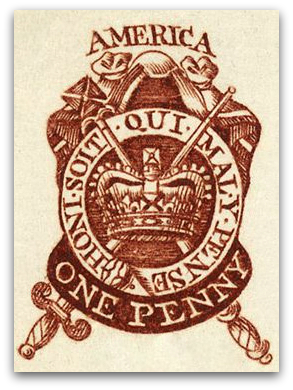
1765_one_penny_stampNancy Siegel explored the imagery of the Stamp Act crisis and the subsequent discord between Great Britain and her thirteen North American colonies. She noted how printmakers employed a satirical mother and daughter motif in their images—printers often portrayed North America as a bare-breasted Native American female warrior— and explored how those images changed over time. Siegel noted that visual satire allowed Britons to express and discuss their views on the imperial crisis as it unfolded.

Craig Smith examined the Stamp Act from the angle of honor. He argues that the colonists had a strong sense of honor—reputation based on an individual’s proper conduct—and that the passage of the Stamp Act violated it. Parliament challenged the colonists' honor by implying that like deadbeats, the colonists would not contribute to the well being of the empire without legislation. Furthermore, by passing the Stamp Act without their consent, Parliament relegated the colonists to a slave-like status; slaves did not have honor because they lacked both freedom and independence.

Richard D. Brown commented that both papers serve as a “launching point” for a discussion of American identity creation. They also offer interesting examples of how we might use gender and culture as lenses to view the events of the American Revolution.


Session 3: Toward the Revolution

What caused the thirteen British North American colonies to split from Great Britain?

Christopher P. Magra, John G. McCurdy, and David Preston shared their insight by exploring press gangs, the Quartering Act, and the loss of British preferment experienced by British officer-turned-Patriot Charles Lee. Christopher P. Magra seeks to revive the economic origins of the American Revolution with his study of British Naval impressment. Magra argues that scholars have turned away from the economic origins of the American Revolution because they believe that the colonists cared more about how Parliament passed taxes (without their consent) than they did about the economic burdens the taxes imposed. Magra seeks to move the economic origins back near the center of what caused the American Revolution by examining the economic hardships experienced by Rhode Islanders as a result of British naval impressment in 1765.
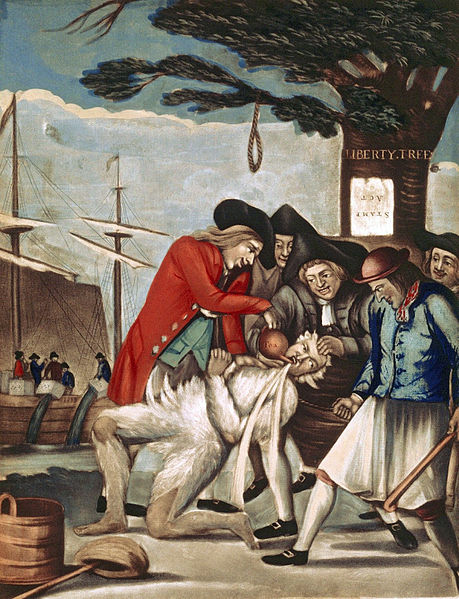
Tar and FeatheringJohn G. McCurdy promises to resurrect the Quartering Act. Historians have claimed that the Quartering Act would have allowed the British government to billet soldiers in the colonists’ private homes. McCurdy’s findings reveal that Parliament had no such intentions. They also disclose how historians can use the Quartering Act and the debates surrounding it to see Parliament’s insufficient knowledge of its colonies and the colonists’ developing interest in a right to privacy.

David Preston has embarked on a project that explores why the American Revolution did “not disintegrate into endless civil war, political retribution and violence or into a military dictatorship or monarchy, as have many other revolutions in world history.” His paper, “Loyalty and Subjectivity in the Postwar British Empire: The Strange Career of Charles Lee” offers insight into the human dimensions of the American Revolution and War for Independence by investigating how Charles Lee grappled with the questions of loyalty and identity. For Lee, and most Americans, decisions of loyalty and national identity were fraught with emotion, an aspect that historians have often erased because they assume that American independence occurred naturally and inevitably.

Robert A. Gross remarked that impressment, quartering, and Charles Lee's loss of preferment all played a role in why Americans decided to break with Great Britain. He noted that many historians portray the American Revolution as inevitable, but that Magra, McCurdy, and Preston have reintroduced contingency to our understanding of the American Revoltion; the period 1765-1775 did not witness a march to the Revolution, events could have turned out differently.


Session 7: The Global Revolution

What was the legacy of the American Revolution and how did Americans who lived through it remember and interpret the event? New scholarship by Mathew Rainbow Hale, Kariann Yokota, and Dane Morrision seeks answers to these questions.

Mathew Rainbow Hale compares the American Revolution with the French Revolution to measure the revolutionary nature of the former. He argues that this comparison allows historians to better understand the contours and parameters of the impact of the American Revolution. Hale’s initial findings suggest that historians of the American Revolution need to reevaluate how they use and view the ideas of democracy and equality. Hale asserts that the French Revolution and its events shaped the way Americans viewed their revolution and its mission to bring forth democracy and equality.

Imperial_Federation,_Map_of_the_World_Showing_the_Extent_of_the_British_Empire_in_1886Kariann Yokota would like scholars to consider how early Americans’ interactions and activities in the Pacific Ocean shaped the development of the British North American colonies and fledgling United States. Yokota observes that as Americans sought independence, Europeans sought to expand their involvement in the Pacific. After the War for Independence, Americans followed the Europeans’ lead and ventured into the region as an opportunity to assist with the growth of their new nation and to demonste their new found freedom. Yokota has found that American activies in the Pacific contributed to the economic, political, and cultural development of the United States.

Dane Morrison’s work also focuses on Americans in the Pacific. Morrison would like to know how the first generation of American traders in the Pacific viewed their American identity and how their interactions with different Pacific Rim peoples affected their portrayal of the American Revolution and its ideas. Morrison seeks answers in the Indies trade literature that emerged during the early republic period, a literature that reflects that early Americans viewed their initial forays into the Pacific as an extension of the American Revolution.

Eliga Gould commented that Hale, Yokota, and Morrison's work reveal how situating the American Revolution into global history can offer insight into the Revolution and how its ideas spread and took shape both during and after the War for Independence. Hale’s investigation reminds us that the French served as the midwives of American democracy. Morrison’s study demonstrates that Americans sought recognition as Americans and when Europeans failed to provide the desired recognition, they traveled to China to get it. Finally, Yokota’s research reminds historians that the United States began thinking about transcontinental concerns only after Americans ventured into the Pacific.


Keynotes

Woody Holton and Brendan McConville offered the two keynote addresses of the conference. Both scholars used their opportunity to lament how study of the American Revolution has waned over the last 25 years.

Holton asserted that historians of the American Revolution are suffering from an “originality crisis.” For the last 10-25 years, historians have created new work on the American Revolution by taking old ideas, adding the theories set forth by their favorite theorist (Foucault/Bourdieu/Habermas), and calling it "new work." According to Holton, applying theory to old ideas does not create new ideas or new work. Instead, it generates jargon-filled scholarship that people can’t read.

USA Declaration of Independence Lying on Grungy Betsy Ross FlagHolton offered three ideas for where scholars of the American Revolution might find new topics: The influence of ordinary people on extraordinary events, micro-comparisons, and statistical studies.

Holton posited that historians would need time to accomplish this work and overcome their “originality crisis.” Time to create “tedious" databases that will yield fascinating insight into the American Revolution. Time to learn Mandarin so we can learn how eighteenth-century Chinese people viewed Americans and their Revolution. Time to produce well thought out, quality studies.

Holton advised the audience to create time by doing away with “quickie dissertations” and by attending fewer conferences.

Brendan McConville agreed with Holton’s sentiment of an “originality crisis.” His talk began with a brief overview of how we came to this crisis: over the last 25 years scholarship has shifted the discussion away from the American Revolution and toward a study of revolutionary America and the failed promises of the Revolution.

Unlike Holton, McConville did not offer any suggestions for how scholars might find new opportunities and ideas as they return their focus to the American Revolution and War for Independence.


Do We Have an Originality Crisis?

Although Holton and McConville offered dire views for the field and its originality, the conference papers suggest historians should be optimistic.

The proffered papers reflect that historians still have a deep interest in the American Revolution and that they want to better understand it by revisiting and reexamining long-neglected events and by situating the Revolution in a global context.

Signing_of_the_Declaration_of_Independence_4KI agree with McConville’s sentiment that historians need to better define what we mean by the American Revolution. Do we mean revolutionary America or the American Revolution, the event? Personally, I believe the Revolution as an event took place between 1763 and 1797 (the end of Washington’s presidency).

Although I would like to see us better define and articulate what we mean by the American Revolution, it would be unwise for historians to disconnect the event from its context.  History is often as much about continuity as is it is about change. In fact, understanding the continuities in an event such as the American Revolution will help us better understand the change the event offered and brought forth.

I think the best studies of the American Revolution will be those that focus on the event while placing it within its context; studies that discuss the event while also showing what preceded and succeeded it. The challenge will be fighting the urge to portray the American Revolution and independence as inevitable. We must show that contingency existed and that the events of the Revolution and its War for Independence could have turned out differently.

I left “So Sudden an Alteration” feeling optimistic and energized about the field and my scholarship. I do not see a crisis, but then again I believe that each generation has something new to say about the past.

No matter how hard we try to study the past on its own terms the present day will always creep in. The present almost always informs our scholarly interests and lines of inquiry.

Scholars who witnessed the social revolutions of the 1960s and 1970s have and still offer wonderful work about the social upheaval that took place during the American Revolution and about how the promises of the Revolution failed to include women, African-American slaves, and the poor—groups that worked to gain inclusion during the 1960s and 1970s.

My fascination with regionalism and American identity stem from the fact that I have witnessed a growing polarization in the politics of the United States. This polarization has occurred as much along regional lines as ideological ones.

Furthermore, I am not sure if historians can ever really enter into an “originality crisis.” The present always offers us new lines of inquiry. The papers offered at the conference clearly demonstrate this point even if the keynote speakers disagree.

 

ThoughtfulManWhat Do You Think?

What do you think about the future of the study of the American Revolution? 

Do you think the field suffers from an originality crisis?


*Joe Adelman and Michael Hattem have also posted their impressions of this conference.
 

The Junto Blog Interview

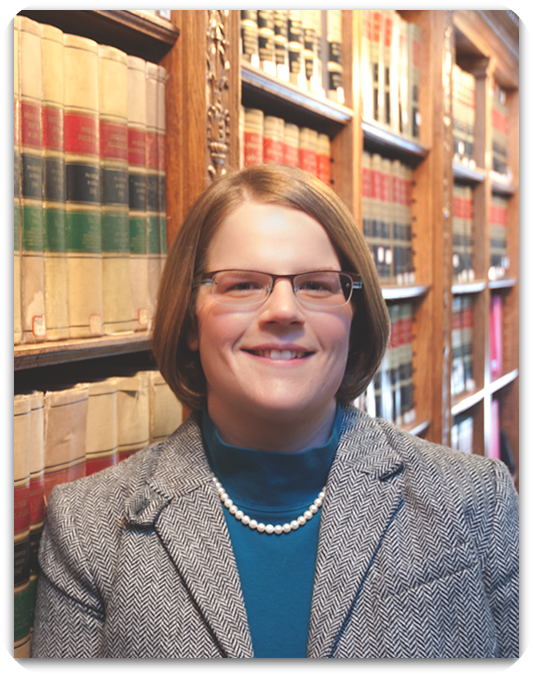
Liz BFWorldLast week, Michael Hattem of The Junto: A Group Blog on Early American History interviewed me about Ben Franklin's World and my alternate career path. Here's an excerpt:

JUNTO: What is your academic/historical background?

LIZ COVART: My historical background consists of training in both academic and public history. In terms of my academic training, I worked with William Pencak and Amy Greenberg as an undergraduate at the Pennsylvania State University. In graduate school, I honed my historical research, writing, and thinking skills with Alan Taylor at the University of California, Davis. My initial training in public history began at Boston National Historical Park where I worked as a seasonal interpretive ranger for five seasons. The wonderful experience I had interacting with the public has prompted me to seek out internships and volunteer opportunities with historical societies since 2007.


JUNTO: Can you tell us a bit about your post-PhD, alt-ac experience?

LC: My post-PhD experience has been one of experimentation. About three years before I graduated I started having doubts about whether the “traditional” tenure-track career path was the path for me. I wanted a job that combined serious historical research, with the public history goal of helping people connect with their past. Since 2012, I have explored numerous opportunities in academic and public history. Today, I work as an independent scholar. I am fashioning a career as a hybrid academic-public historian, a position that represents the not-so-distant future of the historical profession. This hybrid position involves historical research and writing, collaboration between academic and public historians, opportunities to experiment with conveying history through new media, and chances to interact with colleagues and non-specialists at conferences and events.

Continue Reading


Why Do We Continue to Label Historians?

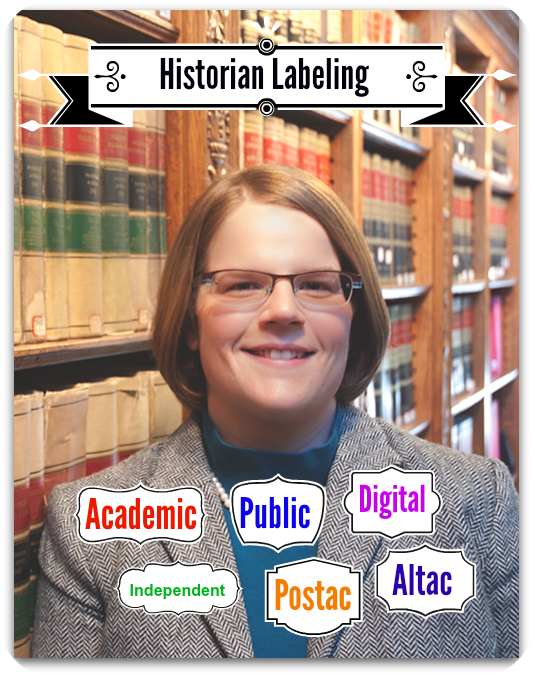
Historian LabelingWhat kind of historian are you? Over the last week, I have been asked this question three or four times. It's a question the irks me because I don’t quite understand why we continue to label our colleagues.

In this post, you will discover the various labels we have for historians, why many historians continue to label their colleagues, and why we should do away with most professional labels.


Overview of Historian Label Use

In graduate school, I learned that historians classify themselves by the period and geography they study: medievalist, early modern Europeanist, South Americanist, early Americanist, 19th-century Americanist, etc.

Classification by geography and period makes sense. Historians all study history, but by stating our period and geography in a quick and efficient way we allow our colleagues to know our area(s) of expertise.

Graduate school also introduced me to the fact that many historians like to classify themselves in terms of affiliation and profession: Academic, public, independent, and amateur.

After graduation, I discovered that professional labels did not stop with academic, public, independent, or amateur. Some historians also use the labels of digital historian, digital humanist, post-academic (also spelled post-ac or postac), and alternative-academic (alt-ac or altac) to define themselves.

I understand why many historians use labels: They provide a short code for who professional historians should take seriously. However, these labels of affiliation and profession are fraught with stereotypes. They are also restrictive, exclusive, and obsolete.

Below I offer my basic (and I am sure incomplete) definitions of each historian label. These definitions should help you better understand why I find them restrictive, exclusionary, and outdated.


Basic Definitions for Historian Labels

Academic: An historian with a Ph.D. in history and a tenure track position as a professor at a university of college. Academic historians teach, conduct research, write-up their research, and use this written work to set and participate in debates and conversations about history.


Speak HistorianPublic: Historians who convey history to the public. Public historians work at public and private institutions such as historical societies, museums, national parks, libraries, and archives. Sometimes they hold PhDs, often they have a masters degree. Public historians have expertise in developing exhibits and interpretive programs about history for the general public. They may also specialize in providing assistance to historians and history lovers who want to find information about history.


Independent: An unaffiliated historian. Someone who self-funds their research. These historians can be trained professionals or journalists-turned-historians. They may also be genealogists who perform genealogical research as professionals and who seek recognition as members of the historical profession.


Amateur: Hobbyist historians. These historians have a passion for history and have followed their passion into the world of archival research. They have no formal training and they pursue their work when they have time. They may write short articles for local newspapers or online publications. Sometimes they write full-length books.


Digital: An historian who works with and incorporates new technologies into their research and historical interpretation methods. They may conduct interdisciplinary work and might consider themselves as digital humanists. Some digital historians create computer programs to extract information from big data sets.


Postac: An academically-trained historian who has left the academy. Postac historians might work as independent historians or they might have left the profession altogether.


Altac: An academically-trained historian who has pursued a different career path within academia. They might head a special department or initiative or assist with or perform administrative work. Many altac historians teach history courses when time and opportunity allow.


Thoughts on Historian Labels

With the exception of the period and geography labels, I believe that the 21st century has rendered the above affiliation and profession labels obsolete.

ThinkToo many historians use affiliation and profession labels as a short code to make a quick assessment about an historian’s work without taking the time to get to know an unknown colleague. They assume that if an historian they meet does not have the “right” label then they don’t have the right kind of training or don't use professional research and interpretive methods.

Historian labels have created divisions within our profession; I have heard both academic and public historians use the term “academic” and “public” as pejoratives to describe a fellow historian.

I have also seen, and experienced, affiliated colleagues shrug off independent historians because of their unaffiliated status. The sentiment “there-must-be-something-wrong-with-you-or-your-work if you are unaffiliated" underlies many of these affiliated historians’ dismissals of their independent colleagues.

We all know that there are numerous well-qualified historians who lack affiliation because the recent recession and an overproduction of graduate degrees has reduced the number of available jobs for historians who wish to work in academia or for public and private institutions.

However, it’s not just professional snobbery that renders historian labels obsolete: it’s how the labels limit the range of our work.

Present-day historians wear many hats and cultivate diverse skill sets to prosper in the tight job market and further their professional work.

I know plenty of academic historians who have a passion for public outreach and plenty of public historians who cross over into the academic realm by conducting high-quality, historical research and conveying what they find in scholarly publications.

There are altac historians who create interesting digital projects and independent historians who work with public and academic history institutions as consultants. Furthermore, there are amateur historians who have a deep passion and know more about certain subjects than those who teach those topics in college classrooms.

No one label can possibly fit most historians because most of us have multiple historical and professional interests.

Furthermore, labels also exclude a number of professional historians because their job descriptions do not fit into any of the above labels. Take documentary editors, for example. These historians have a specialized skill set and job functions that place them in numerous categories: academic, public, altac, postac, and digital. However, using multiple labels is cumbersome and the practice fails to produce a quick short code for their work.


Conclusion

It’s time that historians stop obsessing over professional labels.

We are losing the funding fight with STEM subjects in part because our profession can become consumed with internal fighting over professional labels and the boundaries of work that they supposedly create.

Labels breed professional snobbery and inhibit profession-wide collaboration.

All historians need to be engaged in a quest to reassert the relevancy of history. Therefore it shouldn’t matter what field you study or where you work. We should help instead of exclude and fight with each other.

Discarding labels won’t be easy.

When was the last time you attended a professional seminar, conference, or event that didn’t have you fix an affiliation on your name tag or state your affiliation at the start of the event?

I don’t like labels and I dislike it when my colleagues try to affix a label to me, but I occasionally use them. And yes, I am guilty of using labels to make quick and unfair assessments about unknown colleagues.

But I will do better. I will make a conscious effort to discard labels.

The next time I attend a history seminar or attend a conference that requires me to place a label on my name tag, I will say that I am an historian of early America. Because this is the only meaningful and comprehensive label that describes what kind of historian I am.


Share StoryWhat Do You Think?

What do you think about professional labels? 


Why You Need to Build an E-mail List and How to Build One

Your E-mail ListWhy do historians need to build an e-mail list as part of their platform? How do you build an e-mail list?

In this post you will discover the answers to these questions.

The first part of the post will reveal why you should build an e-mail list. The second part will discuss how you can build your list.


Why an E-mail List?

An e-mail list offers you a powerful tool when you need to promote your latest book, exhibit, article, or special event because it allows you to contact people who are interested in your work.

The people on your e-mail list gave you their e-mail address because they want you to contact them any time you have something new and exciting to share. This is called permission-based marketing.


E-mail List vs. Social Media Followers

An e-mail list offers you more control and access than social media platforms.

Social Media platforms control who sees the information you post. For example, in 2012, authors could count on their Facebook posts reaching about 16% of their friends. In 2015, that number has fallen to an estimated 1-3%; only 1-3% of the people who have “liked” your author page, or who have “friended” you, will see your latest status update.

Email vs. Social Media

The reason for this decline: Facebook is a for-profit business. The company earns money by controlling your access to your friends and followers. If you want more of your audience to see your status updates, especially ones that contain updates like “new book for sale," then you will need to buy a promoted post (a type of advertisement) from Facebook.

Purchasing ad space on any social media network will help you cut through the noise and target the specific demographic(s) interested in your new book, exhibit, or special event. But purchasing an ad still does not guarantee that your exciting news will reach all of your friends and followers.

However, if you send an e-mail to the people on your list, your message will reach the inbox of everyone on your list. This does not mean that everyone on your list will open and read your e-mail, but the chances that they will see the information you sent is much higher than 1-3%.

How to Build Your List

There are two parts to building your list: getting people to sign-up for your list and collecting their e-mail addresses.


Getting People to Sign-Up

The easiest way to get people to opt-in to your e-mail list is to offer them something valuable that is related to your book/site/product.

Ifmailing-list you write a blog that provides useful, high-quality content, you could use your blog posts to entice sign-ups. Presently, I offer a weekly digest of my blog posts to anyone who signs up for my list.

Some writers offer free eBooks or guides that teach people a skill they want to learn. For example, author Joanna Penn offers Author 2.0, an eBook that shares “everything you need to write, publish, and market your book, as well as how to make a living with your writing.”

Pat Flynn, blogger and podcaster at SmartPassiveIncome.com, offers a weekly newsletter with helpful content for those who would like to earn money on the internet.

Don’t have time to write a free eBook or weekly newsletter? Try offering a short, one-page resource list.

Historians could offer a list of their favorite books, historic recipes, clothing patterns, historic sites, period quotes, or top military officers, in exchange for someone’s e-mail address. Many history-lovers would find these types of lists fascinating and would gladly exchange their e-mail address for them.


Collecting E-mail Addresses

The easiest way to collect e-mail addresses is to sign-up for a reputable e-mail management service.

There are many e-mail management services to choose from. Before you sign-up you should investigate whether the service will allow you to:

  • Collect e-mail addresses easily
  • Require opt-in verification to help ensure that the e-mail addresses you collect belong to real people
  • Expand the size of your list automatically
  • Set-up multiple lists (useful if you have multiple products, services, or interests)
  • Send e-mails anytime you want
  • Create and send auto-responders (messages that send as soon as someone opts in to your list; this automated message would contain a welcome note and your free eBook or resource list)
  • Manage your list manually and download it when you want
  • Create and send custom designed e-mails


E-mail Management Services

There are many e-mail management services to choose from, below you will find an overview of 3 services.


MailChimp

About: Founded in 2001, over 7 million people use MailChimp to create and send e-mail. The service sends out over 500 million e-mails per day.

Ease of E-mail Address Collection: MailChimp provides widgets, apps, and forms that you can use to create an e-mail opt-in box right on your WordPress website or Facebook Author/Business/Fan page (not your personal profile page). The service also integrates with Squarespace websites.

MailChimpPricing: MailChimp offers 3 different plans:

Entrepreneur: Designed for those with 0-2,000 subscribers.

The “forever free" plan will allow you to grow your list up to 2,000 subscribers and send up to 12,000 e-mails per month; the equivalent of 6 e-mails to 2,000 people.

The free plan includes the ability to create custom e-mails, generate and send RSS campaigns (e-mails generated by blog posts), and analyze the open rates of your e-mails.

Paid plans in this category range from $10-$25/month and add the ability to send autoresponders, set e-mail delivery time by time zone, better analytics, and access to chat and e-mail support.

Growing Business: For lists with between 2,001 and 50,000 subscribers. This plan provides the same services as the paid Entrepreneur plan, but lists can be as high as 50,000 subscribers. The cost of managing lists in this plan range from between $30/month to $240/month.

High Volume Sender: For lists with more than 50,000 subscribers. Benefits include same as paid Entrepreneur plan, but the price starts at $245/month and goes up from there.


I use MailChimp to manage my e-mail lists. I chose MailChimp because the service offered a free plan and affordable paid plans.

Sprocket MailChimpI have found MailChimp easy to use and easy to integrate into both my WordPress websites and my Ben Franklin's World Facebook fan page.

MailChimp provides an extensive “how-to” help center that helped me set-up my list, integrate my collection forms into WordPress and Facebook, and create my RSS-driven e-mail campaigns.

Since I have a paid plan, I have made use of their chat and e-mail customer support system. The in-person customer support proved useful when I needed to troubleshoot why certain e-mails did not send when I had scheduled them to send.

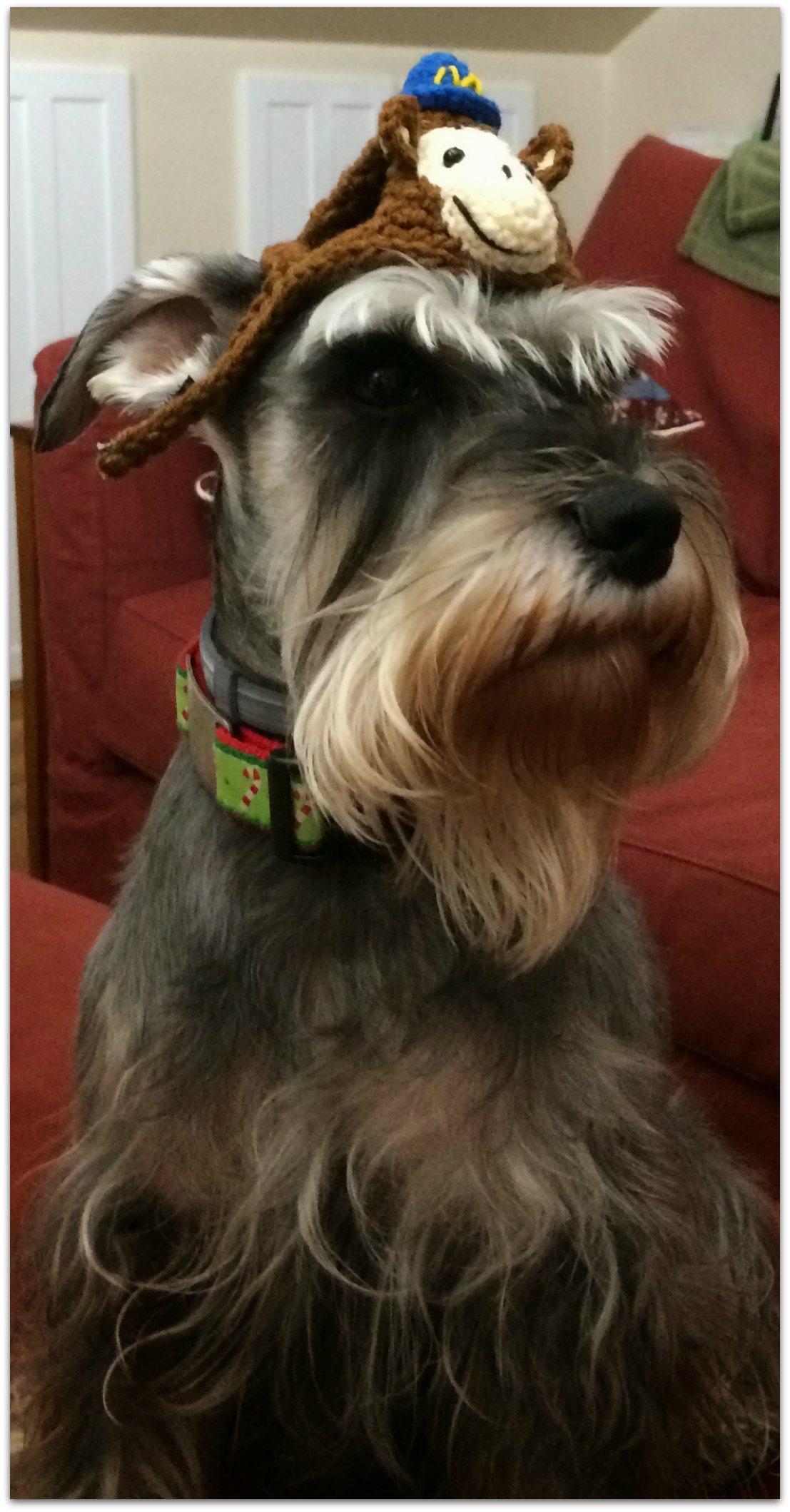
I also think they are a fun company to work for and support. For example, they make hats “for cats and small dogs." I didn't really believe this, but they sent me one for Sprocket after I tweeted them about it.


AWeber

AWeber LogoAbout: Founded in 1998, AWeber provides opt-in e-mail marketing for over 120,000 small businesses, bloggers, and entrepreneurs.

Ease of E-mail Address Collection: AWeber provides a WordPress plugin that you can use to integrate an e-mail address collection form into your website. They also have a Facebook App so you can collect e-mail addresses on your Facebook Fan/Author page.

Pricing: AWeber offers a 30-day free trial of their service. After your trial ends, you will be charged $19.99/month as long as your list remains at or below 500 subscribers. After you hit 501 subscribers, your monthly fee will increase.


MailPoet

macskin_mailpoetAbout: MailPoet has created a plugin that will turn your WordPress website into an e-mail management service.

Ease of E-mail Address Collection: The MailPoet WordPress plugin allows you to create opt-in forms for your website.

Pricing: MailPoet offers a free plan and a premium plan.

Free: The beauty of using the MailPoet plugin is that you turn your website into an e-mail management service. This means you can grow your list and send e-mails up to 2,000 subscribers before you need to pay MailPoet to unlock the 2,000 subscriber limit on your plugin.

Premium: Premium plans start at $99/year for one website. The plan allows you to send e-mails to more than 2,000 subscribers and increases your ability to analyze your e-mail open rate, reader action on that e-mail, and you will have better control over spam subscribers. As a paid subscriber you also receive priority customer service support and access to over 30 customizable e-mail templates.


I used MailPoet when I first started building my list. I used the free plan and found it cumbersome. I had a hard time creating nice, professional looking opt-in forms and e-mail newsletters. I also experienced many hiccups in trying to send my e-mails from the same server that hosted my website.

When it became clear I needed to make a change, I investigated my options and settled on MailChimp for ease of use and price. I switched from MailPoet to MailChimp in June 2014.


Conclusion

Email-EnvelopeAn e-mail list offers you a powerful tool when you need to promote your latest book, exhibit, podcast episode, blog post, service, or special event. It provides you with access to a targeted list of people who are interested in what you have to say and sell. And unlike with social media followers, you can reach ALL of the people on your list any time you send an e-mail.

The best time to build a list is before you need it. Use available apps and plugins to integrate the e-mail management service you choose into your website and Facebook page. It will take some time, but if you offer valuable content your e-mail list will grow.

Building an e-mail list may also help you secure a publishing contract or sponsors for your next exhibit. Publishers and exhibit sponsors love to hear (and want to know) that you have a list of highly-interested people that you can contact at any time to help make your next book or event a success.


Share Your Story

What strategies are you using to grow your e-mail list?

Which e-mail management service do you use? Do you like it?


*If you choose to build your e-mail list with MailChimp, I would be grateful if you would sign-up using my link as we would both earn up to $30 in MailChimp rewards when you upgrade to a paid account.


Wanted: 21st-Century History Job

help wantedWhat kind of job are you looking for? Every so often I receive an e-mail, tweet, or in-person question about whether I am seeking a history job and if so, what type of job I would like.

I sincerely appreciate your concern for my well being and your support of my work.

Usually, I am unable to provide a straight answer because the type history job I would like to have does not exist, yet.

In this post, you will discover the type of work I would like to pursue for a history organization or academic department and the type of historical work that I think is necessary as we move further into the 21st century.


Job Description Must Haves

My ideal job would allow me to pursue the mix of academic and public history work I am presently doing.


Historical Research and Writing

I LOVE conducting archival research. I believe that the best way to understand the past is to use the historical record.

Like many historians, I am driven by questions and the hunt for information. Each trip into the archive is a quest to reveal something new or overlooked about the past.

I also love to write. I enjoy the challenge of sifting through the evidence, contextualizing it, and shaping what I have found into a coherent article, book chapter, or blog post. It’s through writing that I find my most exciting ideas. Writing also provides a great opportunity to convey the past to the present.


MastermindCollaborative Work Environment

The historical profession in the United States requires a closer collaboration between academic and public historians.

Academic historians do not work alone. Public Historians share the academic desire to present high-quality, well-researched history.

Each group possesses skill sets and expertise that when combined has the power to transform what we know about the past and the ways we convey it to the world.

Together both groups of historians can cultivate wide public awareness about the past and convey history in a way that makes it as relevant to the present as we know it to be.

Our cooperative efforts to show the relevancy of the past to the present will ease all historians' ability to access federal, state, and private funding and will increase history class enrollment.


Experiment with New Methods of Conveying History

Historians need to adapt faster and better to the changes in our forward-looking and tech-savvy society.

I love books; I hope to write several throughout my career, but the place of the book in our society has changed. People still read books and magazine articles, but far more consume information via blog posts, podcasts, internet videos, and social media updates.

There are so many new and exciting ways to consume information, which means that there are so many new and exciting ways to convey history. We need to adjust the way we communicate history to conform to our new reality.

I love blogging and digital exhibits, but presently, I am bullish on podcasting.

Podcasts allow historians to tap into two important human desires: Hear stories and accomplish something during normally unproductive periods.

Vector internet marketing conceptHumans love to hear stories. Scientists have proven that we use stories to train our brains; they teach us how to think, perceive the world, and provide lessons about how we can solve problems.

Historians know how to tell stories and podcasts provide a way for us to convey the successes, failures, and issues of the past in an innate and very human way: orally.

Podcasts also provide listeners with a feeling of productive accomplishment. They can listen to podcasts and learn about history at times when they normally can’t be doing something else, like when they need to walk the dog, commute to work, or go for a run.

Additionally, the intimacy of podcasting allows listeners to form a connection with the storyteller. Listeners develop a virtual bond (dare I say friendship) that feels very real with the podcasters they listen to and this relationship leads them to feel vested in the podcaster, their work, and their message.

What could be better for professionals who seek to improve society by creating awareness about the lessons of the past?

Few other methods of conveyance offer the same opportunity to make history as relatable to the present as podcasts.

With that said, we live in a fast-changing world and I would like to work for an organization or department that recognizes that fact and is willing to experiment with other new technologies that promise the ability to cultivate wide public awareness about the past.


Public and Professional Interaction

I would like my future employer to support and provide time to meet with both non-specialist history lovers and professional colleagues.

Historians study the human-made past. Therefore, it is important that whatever organization or department I work for supports opportunities to interact with the public either through programs, tours, or other events.

networkingEach year I give about six tours of Boston that focus on the American Revolution. These tours allow me to connect with people who love history. They also provide me with a better understanding about what non-specialist history lovers know and don’t know about the past. This knowledge makes me a better historian.

I also find great intellectual and social enjoyment in professional conferences. I enjoy learning about what my colleagues are researching and what challenges they face in conveying history.

Additionally, I would welcome the opportunity to attend conferences and collaborate with others who experiment with new media and work in marketing.

Like it or not, all historians need to be able to market the importance of history, it is part of cultivating a wide audience and making history relevant for non-specialists.


Job Description Wish List

Digital Database Access

If I am going to discuss what my dream job would be, I might as well mention the fact that great database and library access would be a plus.

library-cloudI have cobbled together access to important historical databases and ILL privileges through the Boston Public Library and Boston Athenaeum, but there are other databases I would love access to.


Ability to Work Remotely, at Least Occasionally

We live in the 21st century and I would like to work like a 21st-century professional. I would love the opportunity to work in an office with colleagues nearby, but I also enjoy the freelance lifestyle.

It is nice to know that when Tim comes home and says “Would you like to go to Germany in two weeks,” I can go with him. Typically I work half days on these trips and use the other half of the day to visit historic sites an take in a different culture. These trips always provide me with a new perspective and make me a better person and historian.


Summary

In summary, my ideal job would involve historical research and writing, a work environment that encourages greater collaboration between academic and public historians, opportunities to experiment with conveying history through new media, and opportunities to interact with colleagues and non-specialists at conferences and events.

I have yet to see this type of hybrid academic/public history job offered.

However, when history organizations and academic departments finally post these types of hybrid jobs the historical profession will make a great and much needed leap into the 21st century.

I am glad to belong to a progressive and adaptable profession, but I often wish we had the ability to adapt more quickly.


Share StoryWhat About You?

What is your ideal history job?

Are you already working in it? If so, please share your story.