Writing and Publishing

Guest Post: 3 Ways Fiction Writers Use Historical Research by Rick Just

This post is by writer, editor, and artist Rick Just. Rick's post explores how fiction authors use historical research to write and present their stories. Many people read and learn about history through historical fiction. I am excited to post Rick’s essay because it expands our conversation about how we can make history more accessible.  

In the past, I've written adult contemporary fiction, young adult science fiction, and books on local history. Now I'm using my experience with each genre to write a fiction book for young adults that has a strong historical component.
 

once upon a timeThe Story

In The Crappy Used Diary, a 14-year-old named Sam Reed receives a leather-bound dairy for her birthday. Sam's father Chris found the diary while renovating a house from the 1880s. Chris uses the diary as an attempt to interest Sam in history.

Sam is dismayed with the diary; she had wanted an iPhone. Sam wrote about her disappointment in the diary. After writing this entry, she vows never to write in it again.

Several days later, Sam opens the diary to retrieve the pen she had left inside of it. Much to her surprise, she finds an unfamiliar script. Someone has been writing in her diary. Sam reads the entries and discovers that they belong to a girl named Emma Rose Reed who lives 100 years in the past.

Adventure ensues.


3 Ways Fiction Writers Use Historical Research

I conducted historical research for my novel.

Writing fiction almost always requires some research.

I used historical research to inform my story in 3 ways.

Who are you question1. Character Names

It may seem like a small detail, but I consulted census records before I named my characters.

Census records are a great source for finding the most common names for boys and girls throughout history. Some people and organizations have developed databases of common names for different time periods.

I used the census records for the years 2000 and 1900. I chose these records as they would have been the birth years for my contemporary and historic characters.

My use of census records did not stop with my main characters. Like many novelists, I created genealogies for my fictive characters. The fake genealogies helped me create the backstory for my heroines, which in turn helped me to flesh out their lives and personalities.

My fictive genalogies included the names of parents, grandparents, and even great-grandparents. I borrowed a couple of names from my own family tree when I realized that my relatives' real birthdates matched up with the birthdates of my characters.
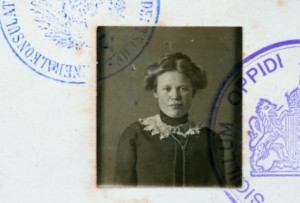
 

1915 Girl2. Context

In order to write about 1915, I had to become familiar with the events of 1915.

Emma's diary entries reflect the day-to-day events of her life. To make her entries believeable, I needed context for the larger historical events that occurred on or around the dates of my fictional diary entries.

I consulted online world event timelines to learn about important events that informed Emma's perceptions of the world around her.

 

Speech bubbles3. Authentic Dialoge

In order to write the dialogue for The Crappy Used Diary, I had to learn more about how teenage girls speak today and how they wrote a century ago.

I listened to my nieces' conversation and eavesdropped in coffee shops frequented by teenagers to learn how present-day teenage girls talk. I also found the Urban Dictionary to be a useful resource. These sources helped me write the dialogue for Sam.

It proved a bit more difficult to capture how the diary's original owner, Emma, would have spoken. Thankfully, the dialogue for Emma is written, not spoken. This meant I needed to find an example, a diary written by a teenage girl ca. 1915.

I contacted the folks at TAG Historical Research in Boisie, Idaho to see if they could help me find a diary from around 1914. Within a half hour, they directed me to the diary of Mabel Claire Nelson in the Idaho Historical Archives.

Nelson kept her diary between 1914 and 1917. Her entries convey many details about her life. I was surprised to find that she underlined words and used multiple exclamation points to emphasize her points.

Nelson wrote about the ordinary details of her life: What movies she had seen and what books she had read. In one entry, Nelson described how she snuck into a revival meeting; she thought the participants hilarious.

Nelson's diary conveyed the writings of a charming, inquisitive girl who had the perfect voice for my character Emma. I quoted only a sentence or two of Nelson's diary in my story, but Nelson's language informed how I wrote Emma's dialogue throughout the book.

It saddened me to learn that Nelson died young at age 17. This knowledge made me very cautious with how I used her words. I wanted to respect Nelson while at the same time give her memory the smallest measure of life in this distant future.


Conclusion

Historical research helps historical fiction authors write credible stories.

If I had not conducted research I might have used 21st-century phrases in an early 20th-century diary entry or late-20th-century names for early-20th-century characters.

Such mistakes would have turned readers off because the names and language would have striked their ears as all wrong.

 

Time-to-ShareJoin the Conversation

Would you like to contribute to our conversation about accessible history with a guest post? Send me an e-mail.

 

Refining My Niche

lightbulbDo you ever have the feeling that the left side of your brain doesn't know what the right side is doing? Or vise versa? I had this feeling a few weeks ago.


Aha Moment

After I wrote my "Getting to the Malleable PhD" post, it occurred to me what my personal narrative really is: I am an historian who strives to make well-researched history accessible.

The medium doesn't matter. I write, speak, and work with digital platforms.

My quest to make history accessible is why I am interested in how historians can write better, get published, use social media, and establish platforms.

We need to know how all of this works to produce accessible history projects.

My blog has always been about the practicalities of how to make history accessible, however I did not consciously realize this until my "Aha Moment" a few weeks ago.

It seems my left brain did not know what my right brain knew.


Human evolutionThe Evolution of My Niche

Blogging pundits will tell you that maintaining a blog is all about niche.

They advocate for as narrow a niche as possible because the more specific your interests the more likelihood you will find a dedicated group of readers.

Over the last 16 months or so, I have been widening my perception of my niche.

Initially, I blogged with an idea that I would write about being an independent historian, which is how I work.

A few months later, I started writing more about writing, so I thought I was writing for historians and non-historian writers.

Now I realize that my writing and interests have always been about history how to make it more accessible. That is the real reason why I write this blog.

This means I write for you, someone who is also interested in history and how to make it more accessible.


Conclusion

My realization won't change the types of posts I write, but it has helped me write more focused posts.

I hope that my realization will help you too.

I hope it will encourage you to think more about why you research, write, and present history.

These are fun and important ideas to think about.


Share-Your-StoryShare Your Story

What is your niche/personal narrative? How do all of your interests connect?


Book Revisions: What's Working and What's Not

EditIt has been a month since I “jumped” into my book revisions with 3 experiments: 1. Early Morning Reading 2. Active Note Taking 3. Increased Accountability

It is time for a progress report of what is working and what is not.


Starting Point

I began my revisions with Chapter 1.

Chapter 1 will discuss the establishment of Beverwijck (Dutch Albany) and New Netherland. It will cover the period from 1614-1664.

Unlike my other chapters, Chapter 1 is not a revision. It will be 95% new work.

Progress is slow.

I forgot how slow it can be to read, skim, and locate books and articles.

My outline for Chapter 1 consists of 5 sections and 26 subsections.


What’s Working?

BooksEarly Morning Reading/Dedicated Reading Time

I try to read a chapter or more every morning.

Sometimes my schedule requires me to move my reading time to later in the day.

Early morning reading/dedicated reading time works.

This practice has helped me read at least 5 chapters a week, which is often a book or most of a book.

I have found this practice to be most helpful during my busiest weeks.

Even when I cannot spare a full day to read and write, dedicated reading time allows me to make progress at a pace of at least 5 chapters per week.


Active Note Taking

Active note taking is time consuming.

After I read, I enter any notes or underlined passages into my DEVONthink database.

After I enter each note, I summarize it into my own words and then place that summary into the appropriate subsection(s) of my Scrivener outline.

Each week I spend hours taking these "active notes."

Although this practice feels like a time suck, I believe it will help me write each section/subsection faster because I will be able to print out my notes and synthesize them into a narrative.


EmailAccountability

Each Wednesday I write an e-mail to Michelle Seaton, my writing coach and editor, to let her know what I have accomplished.

I find this practice worthwhile for 3 reasons.

1.  The e-mails require reflection.

I must think about what work I have accomplished each week and list each book or article I have read.

Reflection helps me see that I am making progress even when I do not feel like I have made any.


2. The e-mails provide motivation.

Each week I know I am accountable.

I know I have to write an e-mail to Michelle and explain what I have done.

I do not want to write an e-mail that lists only 1 or 2 accomplishments; I want to fill the e-mail with as much progress as possible.

Each week I feel motivated to work on my book in part because my e-mails hold me accountable.


3. My writing coach responds with validation.

Michelle has been through the book writing and revision process before. I have not.

Each week, Michelle tells me what I have done well, what I might tweak, and reminds me that I am working hard and making progress.

This validation feels good and motivates me to try and do better the next week.


typewriterBonus Tip: Dedicated Writing Time

Over the last month, I have found another tactic that has helped me make progress: Dedicated Writing Time.

I try to dedicate 8-12 hours a week to book research and writing. I spread these hours over 2 days, usually Tuesdays and Fridays.

Each dedicated writing day receives a 4-6 hour block.

Right now, I am using these 8-12 hours to read, take notes, and think about my revisions.

I find these large time blocks helpful as they allow me to focus solely on my book.

The ability to dedicate this much time is a luxury that many historians do not have, but if you can set aside even just 3-4 hours a week you will make progress on your dissertation or book.

Try to schedule the hours you can spare consecutively. I think you will find the type of deep focus that comes with 2-4 hour time blocks helpful.

Finally, I have made my dedicated writing time inviolable.

I do not allow myself to work on freelance articles or blog posts or run errands, attend appointments, or go out to lunch during my “Book Time.”


genius at work title written with chalk on blackboardConclusions

All of my revisions tactics are working for me.

I just wish I could make faster progress.

I know exactly how I want to write this chapter and I am anxious to accomplish the work.

I just haven’t found a quick way to acquire all of the knowledge I need to write the chapter.

With that said, I know I am a "productive procrastinator." I spent an extra 12 months in the archives before I wrote my dissertation. (I found lots of helpful information, but I probably could have written the dissertation without it.)

To help ensure that I am not “productively procrastinating,” I plan to spend 1 more week acquiring the information I think I need to write the first 2-4 subsections of Chapter 1 and then I am going to take a break from my books and write the subsections as best I can.

I will report on whether that tactic works next month.


Share-Your-StoryShare Your Story

What is your writing and revision process like?

Do you have any tips, tricks, or writing rituals that work for you?

Please share! I could use all the help I can get.


How to Write a Pitch Letter: Pitch Letter Anatomy & What to Do with Your Academic Credentials

American online newapaper web sitesOn March 10, 2014, Jim Downs responded to Nicholas Kristof’s “Professor’s We Need You!” with “Can Academics Bridge the Gap Between the Academy and the Mainstream Reading Public?” Downs opined that academics face prejudice from mainstream editors.

I agree with Downs: Mainstream editors do have a bias against writers with academic credentials.

Academic prose has a reputation for being inaccessible and long-winded, the type of writing that few outside of academia want to read and publish.

With that said, I think academics would have more luck publishing in mainstream media outlets if they mastered the art of the pitch letter and made sure not to overemphasize the importance of their academic credentials.

In this post you will learn how to write a pitch letter. I will analyze its anatomy and discuss how you can use your academic credentials to impress editors.

What is a Pitch Letter?

A pitch letter is a short version of the larger story you wish to tell.

Pitch letters should not exceed 1-page in length and you should write them in the style and voice of the publication that you would like to write for.

Clarity is key.

You should use simple, declarative sentences, clear paragraphs, and a minimum of qualifiers in your pitch letters.


baseballAnatomy of a Pitch Letter

In my experience a good pitch letter contains 6 paragraphs.

Paragraph 1: Lede/Hook Paragraph

Your first paragraph should introduce the editor to new and interesting information.

It should contain the lede or hook for your story.

A lede/hook is a sentence that grabs your reader and reels them in.

The lede is not a plot summary.

Ledes are more like the slogan you see on a movie poster: A short, simple, catchy sentence.


Paragraph 2: Context for Your Lede

Editors want to publish interesting and timely information.

Follow your Lede/Hook Paragraph with an explanation of why your topic is timely.


LaptopParagraph 3: Access

Will your proposed article require interviews or research?

If so, tell the editor that you have access to the resources and people you need to write the article you propose.

If you have conducted research already, tell the editor about the work you have done.


Paragraph 4: Article Length

How long will the article you propose run? 500 words? 750 words? 1,000 words? Tell the editor.

Also tell the editor if you have access to photographs or images that they could publish with your article.

Editors often privilege pieces that include photographs and images.


Paragraph 5: Biographical Information

Why you are the person to write this article?

Briefly summarize your expertise for the editor.

If you have a master’s degree or Ph.D. in the subject matter of your article, tell the editor in 1 sentence.

Follow this sentence with links to a few of your clips.

If you are an academic, link to clips you have done for non-academic outlets. If you have a book, link to your book.

If you do not have any clips, point to blog posts or let the paragraph end with why you are the person to write the article you proposed.

Do not discuss the fact that you have no clips or limited experience in your pitch letter. Wait for the editor to ask you about your experience.


Thank-YouParagraph 6: Thank You

Thank the editor for their time and consideration.

Tell them where they can reach you.

Sign your name.

If all goes well, you should hear back within a week or two.

If you do not hear back within two weeks send a follow-up e-mail.


Pitch Letter Tips

1. You should send all pitches via e-mail unless your research about the publication tells you otherwise.

(Your research about the publication should also tell you which editor or assistant editor to pitch.)

2. Place “Query: [YOUR BRIEF SUBJECT]” in the subject line of your e-mail

3. Do not send attachments unless the editor asks you to. If you want to send clips or your writer resume, include links to those pages on your website.


lightbulbConclusions

Like Professor Downs, I have experienced wariness on the part of editors when it comes to my academic credentials.

I try to win them over by not overemphasizing my Ph.D.

To this end, I emphasize my story first and place my academic credentials in the second to last paragraph of my pitch letters. I talk about my credentials only in a sentence or two and I provide links to clips that reflect my ability to write for mainstream audiences.

I have had two editors ask me to submit articles I have proposed on “spec,” which means they liked my story, but wanted to read the entire article before they committed to publishing it. This happens to non-academic freelance writers too.

I hope that these requests will happen less as I build a track record of published articles in mainstream outlets.


Share-Your-StoryWhat Do You Think?

How do you pitch editors?

Do you have a trick or techniques that have proved helpful to your success with mainstream media?


How to Write a Book Proposal: 6 Crucial Elements, Guest Post by John Wilsey

John Wilsey teaches history and philosophy at Southwestern Baptist Theological Seminary. He is the author of One Nation Under God: An Evangelical Critique of Christian America and blogs at johndwilsey.com. typewriterYour book proposal needs to be more than good. Your book proposal needs to be magnificent.

Your book proposal is your work’s first introduction to a potential publisher.

It is imperative that your proposal be clean, eloquent, organized, well-researched, realistic, and compelling.

Think of your proposal as your book’s coming-out party. You are giving wealthy suitors the chance to meet the lovely maiden you have raised from infancy. So you better make sure that she has nice teeth.


6 Elements of a Book Proposal

 Element 1: Project Description

The first element of a good book proposal is your topic statement.

In the topic statement, you need to spend a couple of paragraphs broadly summarizing what your book is about.

  • Discuss the importance of your topic.
  • Clearly state your thesis.
  • State the central argument of your book in one or two sentences.
  • Give a couple of clear and precise lines about your methodology.
  • Explain how your proposed book fits in with your other published works OR clearly indicate if this book will be a revision of your dissertation.
  • Write a few lines about your school, your program, and who sat on your committee.

If this first section is clear, concise, and original, your potential publisher will continue reading.

If not, the abyss of obscurity yawns before you.

TargetElement 2: Target Audience

Give details about the target audience for your book.

  • Are you writing for scholars?
  • Students?
  • Religious leaders?
  • An informed audience of laypersons?
  • Will your book serve as a course text?

Be as specific as possible when you identify your intended audience.

Target audience is one of the publisher’s first considerations.

If your book could serve as a course text, write a list of specific courses that could use your book. Again, be specific. Don’t make up interesting course names.

Look at the course offerings in academic catalogues, and get in touch with professors who teach those courses. Ask these professors if they would include a book such as yours in their course syllabus.

Request their permission to list their name and courses in your proposal.


BooksElement 3: Historiography/Comparable Works Section

Give some information on the related book market.

  • Where does your book fit within the literature?
  • Why is another book needed on your topic?
  • What original contribution does your book make?

Write a bibliography of the current literature related to your book. Annotate the 10 to 15 works that are most closely related to yours.

Annotation Includes:

  • A paragraph that summarizes the book
  • A paragraph that situates your work within the existing field. (A brief description of how your book will add to and differ from the book you just summarized.)

Provide another 20 to 50 titles that are less closely related to your work, but are still germane to your topic.

Show how your book is different from those as well.

The “Comparable Works” section shows your publisher that you are up on the literature.

It demonstrates that you have looked at the books in your field, and that you are confident your book contributes meaningfully and originally to it.

If you can show that your book is a meaningful and original contribution, then you are assuring your potential publisher that your book will make an impact, and thus a profit.


Chapter 1Element 4: Chapter Outlines/Annotated Table of Contents

You have to balance 2 goals as you write your chapter outlines:

1. Clear presentation of argument

2. Showcase the features and stories that make your book marketable

Note how you will present your thesis in the introduction of your book and explain how your chapters will argue and further your thesis.

Elements of Chapter Outlines:

  • List Chapter Titles
  • Provide 1 paragraph of summary for each chapter; include how said chapter will argue/further your thesis (NOTE: Do not make your argument in your chapter outlines. Be clear, but include a dash of ambiguity to leave your reader wanting more.)
  • Estimate the length of each chapter (10,000 words = approximately 30 pages of typed, double-spaced text). Many trade presses consider a work of 80-90,000 words the sweet spot.


Element 5: References

Include a list of references, scholars in your field who will endorse your ideas.

Ask 15 to 20 people to look over your proposal and ask them if they will affirm that your proposed book has the potential to make a valuable contribution to your field.

To clarify: these are not people who are endorsing the book. They are endorsing: 1. You, as a qualified scholar and 2. Your proposal.

In other words, you want recognized scholars to affirm that your work will be as valuable as you have stated in your proposal.

Your reference list will give comfort to the potential publisher concerning the viability of your proposed work. When recognized scholars in your field vouch for your project’s legitimacy, it bolsters your credibility.

Don’t be shy about contacting senior scholars and asking them for to help you in this way. Some will decline, but you’ll likely be gratified to see that many are happy to help you succeed.


Quill-and-InkElement 6: Writing Sample

The last element of your proposal will be your writing sample.

The writing sample should consist of a chapter that states your thesis, methodology, and organization.

Make sure, beyond all doubt, that your sample chapter consistently reflects how you’ve written your proposal!


The Finished Proposal

Your completed proposal should be about 10 to 15 pages total excluding your sample chapter.


Conclusion

Your proposal represents your first effort at marketing your book.

Consider it a major project in its own right. Devote time and thought to it.

The quality of your book proposal will determine whether or not a publisher will give your work their full consideration.


Share StoryShare Your Story

How many books did you include in your comparable works section? 

Did you include references with your book proposal? If so, how did you approach your references?