Writing and Publishing

Jumping In: Book Revisions

EditHow do you revise a non-fiction book? I have pondered this question over the last several months.

Writing my book proposal helped me figure out what stories and information I want to include in my book AMERICA’S FIRST GATEWAY. However, my book proposal did not lay out a clear plan for how I should revise my manuscript.

I finished my book proposal in late September 2013 and since that time I have worked on freelance articles, blog posts, and an academic journal article.

I finished the journal article 2 weeks ago, which means that I finally have to start revising my book, not just talk about it.

Last week I willed myself to start revising.

I opened my book proposal, read through my Chapter 1 description, and dissected it.

I outlined all of the major topics and subtopics for the chapter. Under my subtopics I listed all of the books and article titles that I need to read/skim to write about that subtopic.

This week, I began reading books and articles that will help me find the information I need to revise Chapter 1.


Experimentation

I do not know how long it will take me to revise my book. I do know I want to work smarter than when I wrote my dissertation.

I am trying 3 new techniques to ensure that I write and make progress every day. (Okay, maybe not every day, but most days).

Zemanta Related Posts ThumbnailExperiment 1: Early Morning Reading

Each morning I read.

I read an article or part of a book before I sit at my computer.

I love my computer, but it is a major source of distraction.

I used to start my day by checking e-mail, Twitter, and blog feeds. Inevitably, one or more of these items would distract me from the work I needed to do.

Now, I begin with reading, which helps me focus on work before I get distracted.


Experiment 2: Active Note Taking

After I read, I enter my notes into DEVONthink.

The process of typing my notes helps me consider the information I read. After this deliberation, I open Scrivener, click on the book/article card I created, and summarize the reading in my own words.

The act of summarizing ensures that I write every day.

I plan to use my summaries as reference material when I write each subsection.


SuccessExperiment 3: Increased Accountability

Progress requires action. It also commands accountability.

I will make myself accountable to others.

I will make weekly progress reports to my writing coach and update my writing group during our bi-weekly meetings.

I will also blog about my revisions work.


Conclusion

I am not sure if my revisions plan is the best plan, but it is one that will help me make steady progress.


time-to-shareWhat Do You Suggest?

How have you (do you) approach your long-term writing projects?

Do you have a system or technique that allows you to make steady progress?


Challenges: Inarticulateness

Stuck-WriterWednesday, February 19, 2014, 12:57pm

I am suffering from inarticulateness this week.

All of my writing feels forced because I cannot easily put the ideas in my head into words on my computer screen.

I do not know why the words won’t flow easily from my brain to the page. Some days or weeks my writing is just inarticulate and forced.

Although it is frustrating, I will to continue to plug away.

I will show up to write every hour that I have budgeted to write.

I am going to try and remedy the situation by taking my dogs for a long walk to clear my head. If that doesn’t work, tomorrow I will change my scenery.

When I feel inarticulate at home sometimes writing at the library or a cafe helps. I have at least 3 alternative writing locations on standby.


What Do You Think?

How do you overcome your inarticulate writing days? The days where your head is swimming with ideas that you can’t put down on paper. 


5 Steps for Marketing Your Academic Book, Guest Post by Michelle Marchetti Coughlin

Michelle Marchetti Coughlin is an independent scholar and the author of One Colonial Woman’s World: The Life and Writings of Mehetabel Chandler Coit (University of Massachusetts Press, 2012). CoughlinCompleting a book manuscript, and then gaining support for that manuscript from a university press editor, peer reviewers, and a faculty editorial board represents an enormous amount of work.

But having your manuscript accepted for publication by an academic press does not mean your efforts to make your work available to a wider audience are over.

In order to make your investment of time and energy truly pay off, you need to participate in the promotion of your book.

Many university presses have small publicity departments tasked with publicizing not only multiple new titles each year, but also backlists numbering in the hundreds.

As a result, the time, attention, and funds these departments are able to bestow on the promotion of a single book are often limited.

The good news is that there are 5 steps authors can take that may dramatically increase the reach of their work.


5 Steps for Marketing Your Academic Book

personal website 1. Establish a Web Presence

An attractive, easily navigable website is an invaluable tool for the promotion of a book.

A website will not only expose your work to a much wider audience, but will provide potential readers with information on how to contact you and where to hear you speak.

Setting up a website can be expensive, but it is a highly worthwhile investment (and a service you might obtain at a discount from a talented college or graduate student).

 Tip: Be sure the pages on your site are encoded for Google Analytics so you can monitor your traffic, and take care to keep your information up to date.


2. Utilize Social Media

Zemanta Related Posts ThumbnailIf possible, publicize news about your work and speaking engagements through Facebook, Twitter, LinkedIn, or a blog as an additional measure to help colleagues, friends, and others interested in your writing keep current with your activities.


3. Contact Print and Other Media

Although your publisher’s publicity department will notify appropriate media outlets about the release of your book (be sure to thoroughly fill out that marketing questionnaire!), you may want to personally contact your hometown media or alumni publications.

Try to arrange an interview with your local radio station or with “Fieldstone Common,” a weekly podcast that reaches an international group of history enthusiasts. These types of non-specialists are an important but sometimes overlooked audience for scholarly books.


Jim Ottaviani at Nicola's Books June 20134. Set Up Readings and Appearances

Arranging speaking engagements for authors is often outside the purview of university press publicity departments, but these events are necessary for promoting your work.

You should plan to contact libraries, museums, and other institutions offering programming in your field as well as historical, genealogical, and lineage societies to ask if you might present a lecture on the topic of your book.

Create a simple Power Point and make your presentation as interesting and approachable as possible to a general audience.

Try to avoid reading from your notes.

Make sure you have business cards on hand as well as books for sale, if this is appropriate.

Talks that are well received often lead to other opportunities and invitations to give additional lectures, not to mention productive relationships with host institutions.

Be sure to keep your press’s publicity department informed of your appearances (and any other professional developments) so they can broadcast this information on their own social media pages.


mailing-list5. Maintain a List of Contacts

Create a file of contact information for individuals you’ve met through your speaking engagements and who’ve reached out to you through your website or social media pages.

Whenever possible, thank those who write favorably about your book in blogs or online reviews, such as Amazon or Good Reads.

The connections you make in the process of promoting your book can be wonderful resources that may also provide an audience for your next book.


Conclusion

The above are just a few suggestions for new authors (and do not include opportunities to network with colleagues or publicize one’s work in the academic arena, such as through conferences, panels, and journals).

For further information, you may want to consult William Germano’s chapter “Promoting Your Work” in [amazon_link id="0226288536" target="_blank" container="" container_class="" ]Getting It Published: A Guide for Scholars and Anyone Else Serious about Serious Books[/amazon_link] or any of the many other online and print resources available on this topic.

Best of luck!


Thoughtful-WomanWhat Do You Think?

Do you have any additional tips for marketing your academic book? 

For non-academic writers, do Michelle's tips differ for trade publishing?


6 Tips That Will Help You Find Time to Write During the Academic Year, Guest Post by John Wilsey

John Wilsey teaches history and philosophy at Southwestern Baptist Theological Seminary. He is the author of One Nation Under God: An Evangelical Critique of Christian America and blogs at johndwilsey.com. Tired businesswoman with telephonesEveryone’s busy.

We all have responsibilities that demand our time and attention.

Teaching is always a time-consuming and work-intensive demand. As are the array of other duties that go along with teaching: committee work, service projects, advisee meetings, and perhaps an administrative agenda.

Then there’s writing.

Writing is an extension of our teaching. Not only is it important element of how we advance our academic careers, it is essential for us to stay sharp in the classroom and in our fields.

Writing is a non-negotiable. If you want to teach, you must write.

So how does a professor find the time to write?


Tip 1: Don’t Find Time, Make Time

You may say—I don’t have the time. I’m too busy. Not only am I maxed out at school, I have a family, a neighborhood, or a faith/civil community that is depends on me.

However, if President Obama sought our regular counsel on some issue that required a time commitment, perhaps we would ask, “how do I make the time to accomplish this task?” rather then “how do I find the time?”

When you write, and write well, you never know, President Obama may indeed sit under your counsel by reading your work.

(Don’t laugh. I wrote a post, "Threats to Our Republic: the HHS Mandate and Incivility," last spring on civility in political discourse from my perspective as a conservative. One of the points I made was that everyone, including conservatives, must show deference to President Obama, because he holds the office of President. Two days later, I had the surprise of a lifetime: I received a note of thanks from Joshua DuBois, special counselor to President Obama on faith-based initiatives.)

CalendarRemember writing your dissertation?

When did you make time for that enormous undertaking?

You likely found it in the nooks and crannies of time during the day, in larger chunks late at night, and in the early hours of the morning. When you are busy, you must find time to write in similar ways.


Tip 2: Live By Your Calendar

Set aside blocks of time on a weekly calendar for writing and stick to those times. Be disciplined about your time management.

Ask the important people in your life to help you with time management.

If you’re married and/or have children, ask your spouse and kids to help you schedule your blocks of time on the calendar at the beginning of each semester.

When each semester is over, take a small sabbatical from being hard-nosed about time management—but keep writing.

When the next semester comes around again, go back to your family and your calendar and block out times for writing for the next three or four months.


Tip 3: Prune Hobbies to Create Time and Rewards

Something might have to give.

You may have to give up certain hobbies for a time—not permanently, but for a little while.

Goal text and question markSet goals for your writing and reward yourself with a renewal of those fun activities.

I’m an outdoorsman and for a few months I forgo outdoor activities so I can focus on writing. I renew my time in the outdoors each time I accomplish a writing goal.


Tip 4: Surround Yourself With Productive People

Good company encourages good habits: Surround yourself with people who research and write.

Create or join a peer group of people who regularly write. These people will provide positive peer pressure for you to do the same.

Group members should be colleagues who will encourage you in your projects. You should also encourage them.

Participation in a writing community can be a powerful motivator.


typewriterTip 5: See Writing As Important

If you can’t shift the question from “how do I find time?” to “how do I make time?,” you probably aren’t motivated enough to write. That sounds harsh, but it is true.

You will always find time for the activities you most desire to do.

If you don’t want to devote your energies to research and writing, then you won’t do it.

But if writing is important to you—and you see it as important to you—then you will find a way to make it a part of your day.


Tip 6: Methods that will Integrate Writing Into Your Day and Keep You Mentally Sharp

Perhaps you’ll practice your writing by keeping a journal or by keeping a blog that will hone your ability to communicate to a popular audience.

You may write book reviews to stay current in your field or sharpen your research skills by writing papers that you can present at conferences.

Maybe you’ll choose to sharpen your argumentation skills by writing editorials.


Share-Your-StoryConclusion

You have the time to write and you can make your schedule conform to your desire.


What do You Think?

How do you make time to write?


Writing American History Outside of the Academy

Writing-History Have you ever wondered what it takes to write a great history book for a popular audience?

This year’s American Historical Association conference hosted several panels about writing history. I attended 3: “Historians, Journalists, and the Challenges of Getting It Right: The Art and Craft of the Obituary,” “Writing History for the Public,” and “Writing American History Outside the Academy.”

All of these panels contained helpful information, tips, and suggestions for historians who want to write for a general audience.

Today, I offer a recap of “Writing American History Outside of the Academy,” which provided advice on how historians can make their writing more enjoyable for a non-academic audience.

You can find my summaries of “The Art of the Obituary” and “Writing History for the Public” on John Fea’s blog “The Way of Improvement Leads Home.”

Biggest Takeaways: Historians need to learn the conventions of nuance and complex storytelling from novelists. As humanists, historians have a duty to portray the complexity of human life. Historians need decent writer websites.


Panel Summary

“Writing American History Outside of the Academy,” explored “the act of writing and how history gets done.” Unfortunately, bad weather limited the 5-person panel to chair Joseph Kip KosekAdam Goodheart, and Louisa ThomasMegan Marshall e-mailed her comments, which Thomas read.

An historian, essayist, and journalist, Adam Goodheart writes for National GeographicOutsideSmithsonianThe Atlantic, and The New York Times Magazine. He also wrote [amazon_link id="1400032199" target="_blank" container="" container_class="" ]1861: The Civil War Awakening[/amazon_link], “a gripping and original account of how the Civil War began.”

Once upon a timeGoodheart believes that historians should simplify their analysis, but embrace complexity in their storytelling when they write for a general audience.

Goodheart urged historians to read and study works of fiction. Novels often feel more life-like than history books because they present nuance and complexity. Historians could produce more life-like histories if they used these novelistic conventions.

Goodheart drove his point home with a quote from author Philip Roth: “As an artist the nuance is your task. Your task is not to simplify. Even should you choose to write in the simplest way, a la Hemingway, the task remains to impart the nuance, to elucidate the complication, to imply the contradiction. Not to erase the contradiction, not to deny the contradiction, but to see where, within the contradiction, lies the tormented human being.”

According to Goodheart, there is no reason a 300-page history book cannot show nuance and contradiction. Historians are humanists and humanists have a mission to show the world the complexities of human beings.

Finally, Goodheart asked the audience to be concise and not to get hung up on “simplification.” Historians already simplify; the historian’s focus on argument represents a form of simplification. Additionally, historians simplify history again when they choose which facts to leave out of their monographs.

Stranded in Boston by the“Blizzard of January 2014,” Megan Marshall e-mailed comments for the audience. Louisa Thomas read them.

Marshall believes that anyone can write history and her experience proves her point. Marshall is not a trained historian, but she has written 2 historical works, both biographies and the first, [amazon_link id="0618711694" target="_blank" container="" container_class="" ]The Peabody Sisters[/amazon_link], won several awards, including the 2005 Francis Parkman Prize for the best-written work of American history.
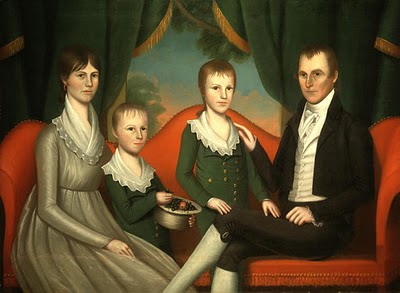
1804_Ralph_Eleaser_Whiteside_Earl_Family_Portrait_National_Gallery_of_ArtMarshall also questioned the historian’s reliance on argument, which she feels limits them when they write. Instead of focusing on argument, Marshall wants historians to write more about the people, places, and times they admire. She would also like historians to write more biographies because the narrative art of the genre would teach historians how to write exciting, well-written history books.

Like Marshall, Louisa Thomas is not a trained historian. After completing her B.A. in English at Harvard, she worked as a fact checker for The New Yorker. Thomas credits this work with giving her the experience she needed to research and write her book, [amazon_link id="B007HW6AOE" target="_blank" container="" container_class="" ]Conscience: Two Soldiers, Two Pacifists, One Family—A Test of Will and Faith in World War I[/amazon_link].

Thomas reiterated the need for historians to study fiction. Historians need to give readers a reason to turn the page, something many fiction writers do well.

Thomas stated that good history starts with the impulse to be close to people of another time. Like historians, readers also want to get to know the people of the past. Historians need to understand and talk about human beings as they are—emotional, conflicted, and contradictory creatures—if they want to reach a large audience.


Audience Q & A
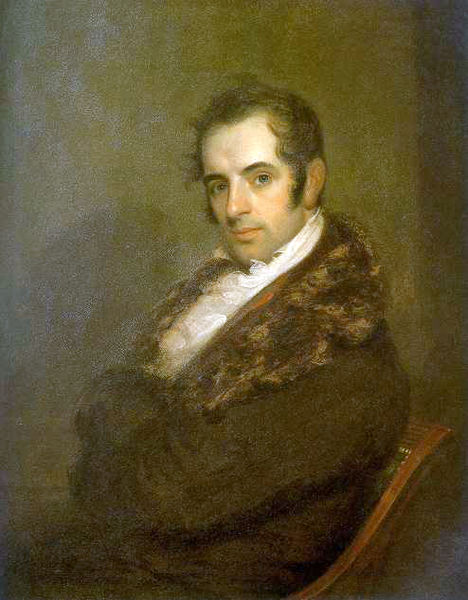
Washington Irving, 1809

Questions from the audience encouraged Goodheart and Thomas to provide more practical information about publishing and how to write for a general audience.

The Q&A discussion fell into 3 categories: Writing, Publishing, and Marketing


Writing

• Historians need to write more about people than about their arguments. Historians can make arguments through their narratives without having to focus on a thesis statement.

• Footnotes: Thomas commented that academic historians use footnotes to highlight their sources. Trade authors use them as a place to present the historiography for those who wish to consult it.

• Goodheart suggested that historians approach writing as if they were foreign correspondents in a foreign past. This approach will help historians write for their readers and help them describe the “obvious” information that isn’t obvious to most readers.


Publishing

Should you publish with an academic or popular press?

• Thomas: If you are looking for an academic job, go with an academic press.

• Goodheart: Be strategic and go with the press that caters to the audience you wish to reach.

• Wendy Strothman (Literary Agent): If you are looking for a tenure-track job publish with a good university press. University presses are more forgiving when book sales are low; bad sales figures will haunt you when you publish with popular presses.

• Strothman advised the audience to make sure they keep the option to their film rights.


Marketing/Writer Platform

Looking for a Literary Agent?

  • Strothman: Agents will Google search you so create or update your writer website. Your website should contain PDFs and links to your articles as agents want to see your sources and expertise.

Tips and Tricks for Marketing Your Book

  • Be ready the moment your book comes out. Most live or die in the first few weeks after publication.
  •  Call in every favor and connection you have to get word out about your new book.
  • Never say “No” to promotion. Go to the small bookstores and sell 15 copies.
  • Consider investing in promoted Facebook posts or sponsored tweets.
  • Be prepared to be depressed by book sales. Even if others review your work, you might not be happy with your sales numbers.
  • Strothman: Tell agents how you will help them market your book, do not tell them about the market for your book. Also, you need a decent website.


time-to-shareWhat Do You Think?

What do you think about the advice these authors offered?

Do you have tips, tricks, or stories to add?

Take my reader survey so I can better serve you with my content.